
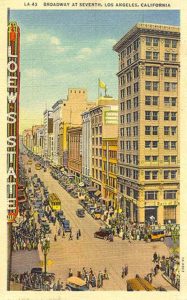
 Do you like art deco? Old movie palaces with lots of neon? Looking for a good taqueria or perhaps some designer coffee? Interested in an edgy, historic, multicultural, almost surreal old American downtown with incredible architecture in the midst of a momentous and uncertain transition? Look no further than downtown L.A. which happens also to be part of the original alignment of Route 66 to Los Angeles. From 1926 – 1931 the Mother Road followed Broadway on a southwestern routing (after leaving Huntington and connecting to Broadway via a short stretch of Fremont). The original Western Terminus of Route 66 was not in Santa Monica but at 7th and Broadway in the downtown. See vintage postcard to the left at the top of this post – that’s the original end of the road, as it was in Broadway’s heydey. The realignment in the early 30s via Highland Park on Figueroa also eventually wound up downtown. The Western Terminus was not moved to Santa Monica until 1936 (see next post).
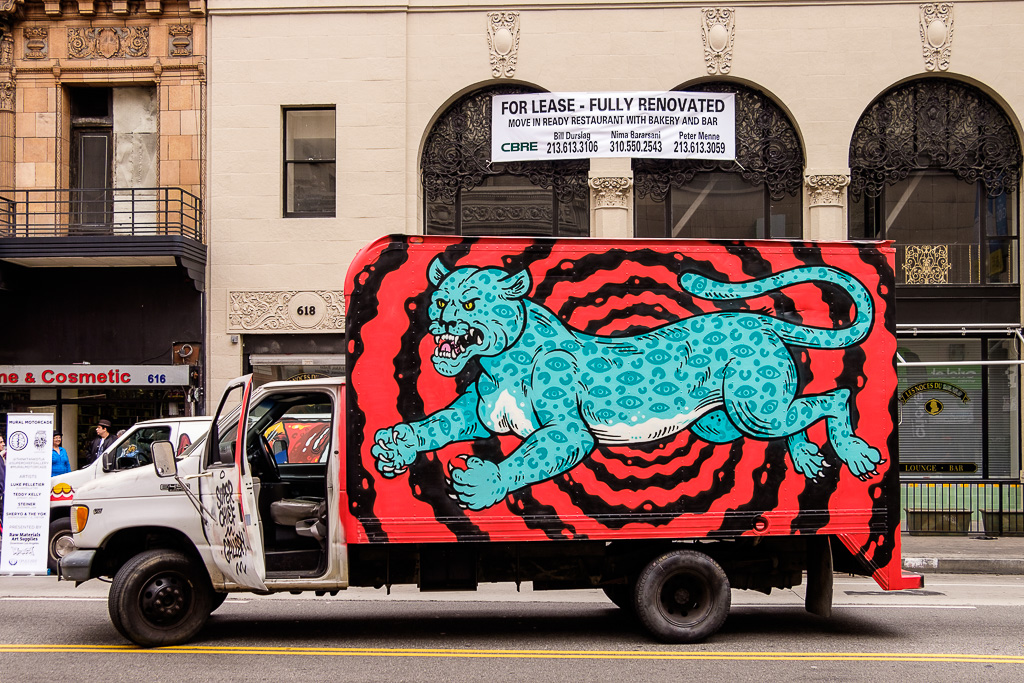
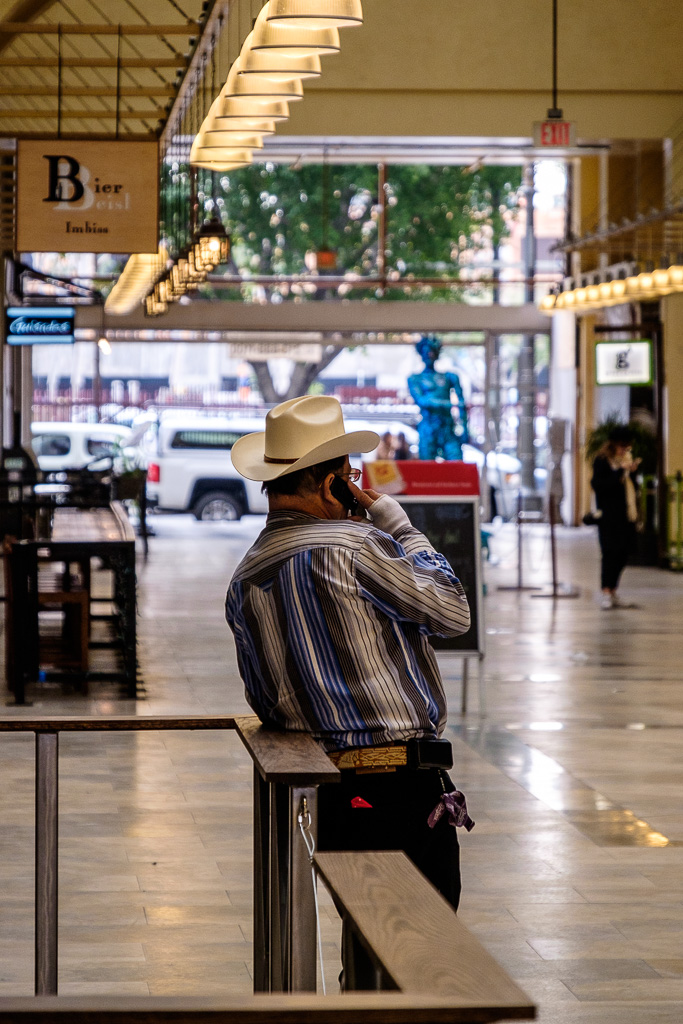
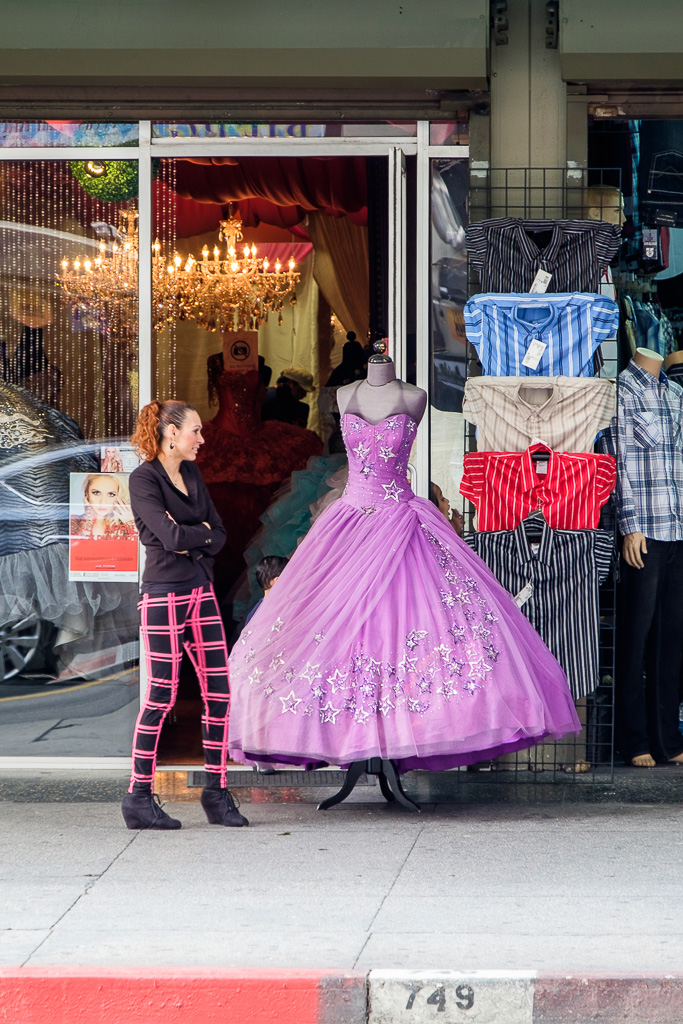
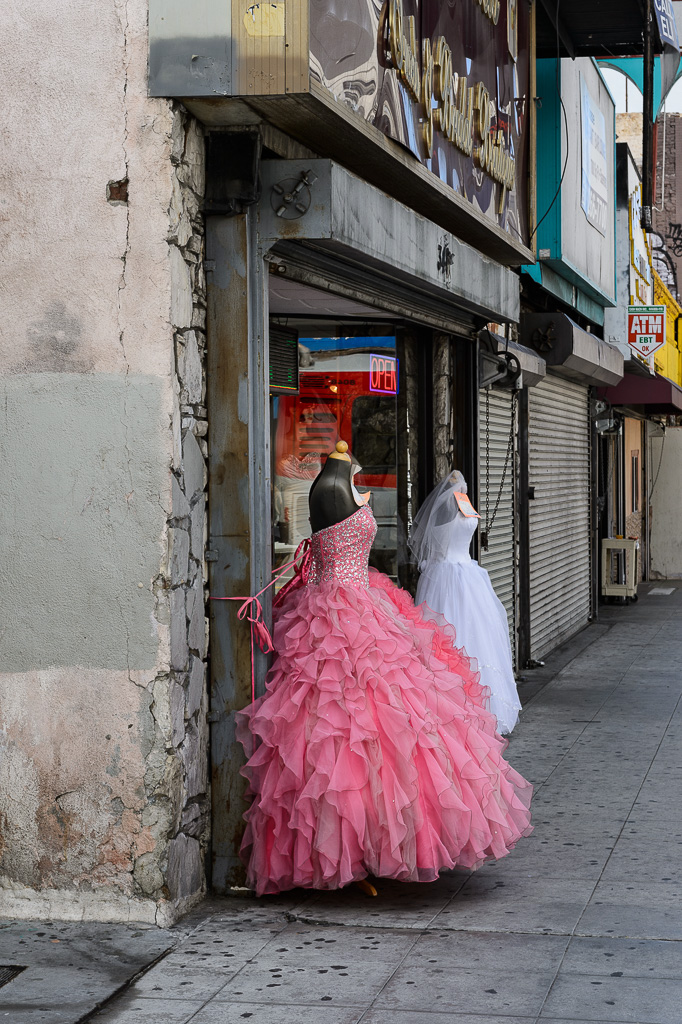
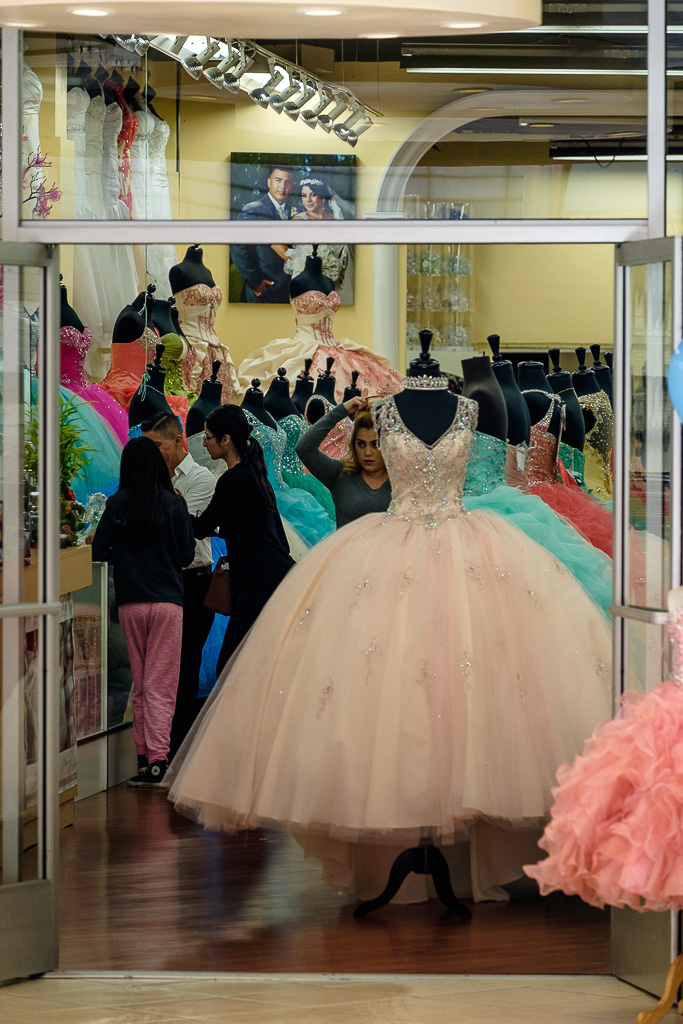
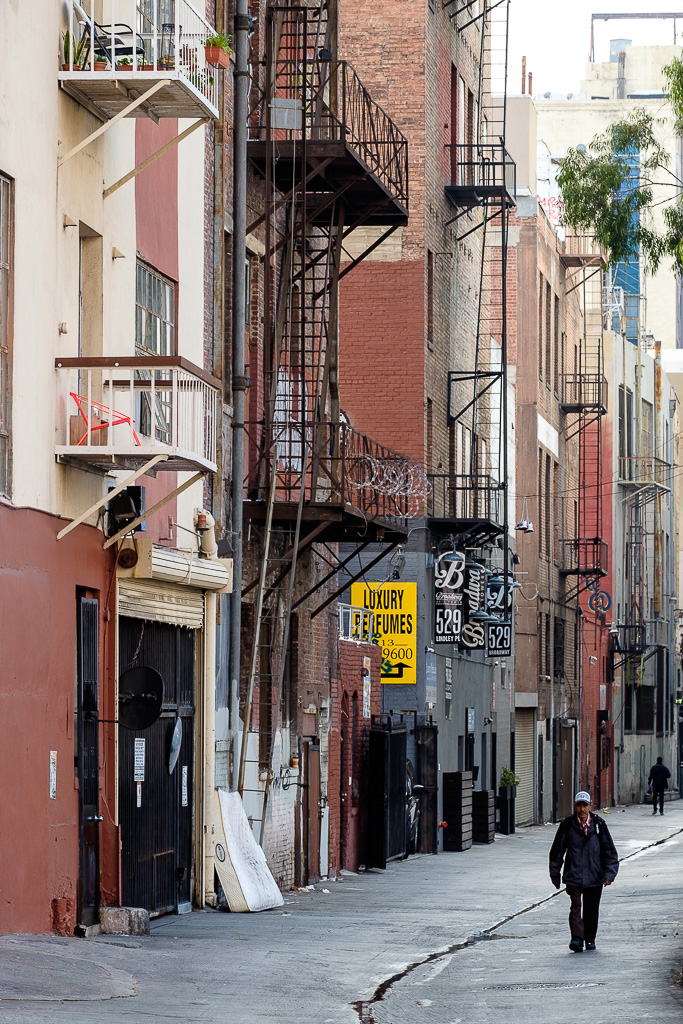
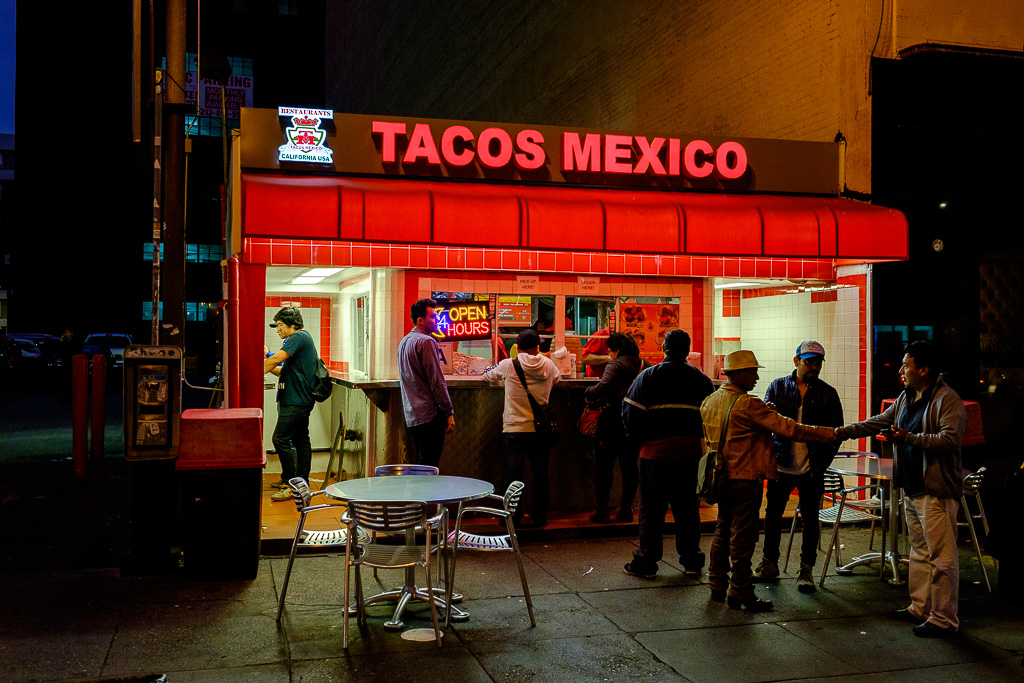
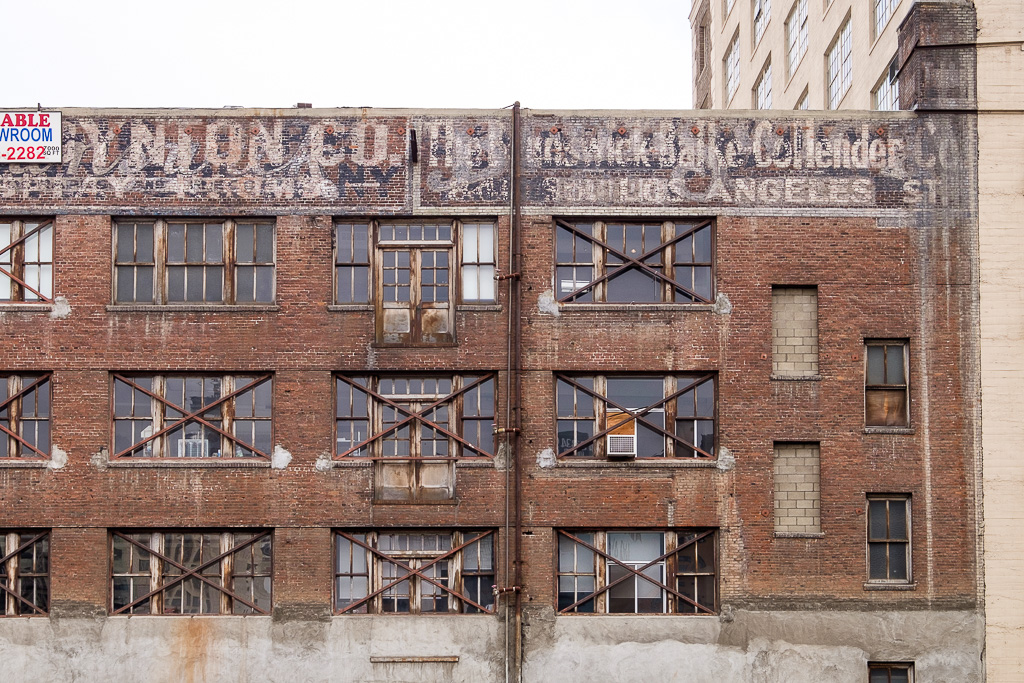
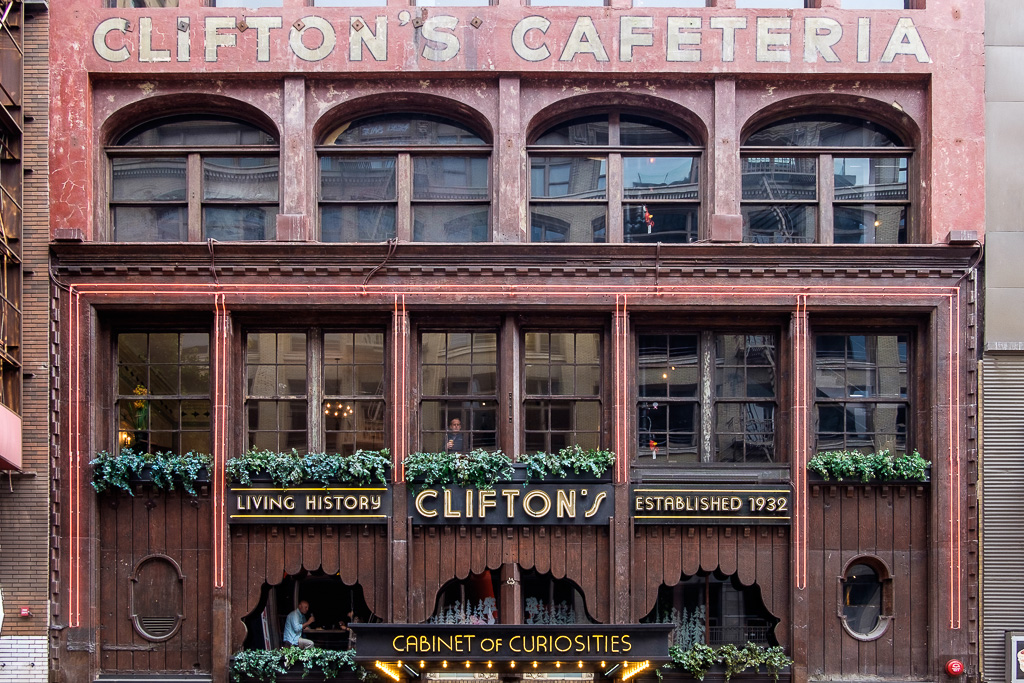
We will start with some street photography. From the 1970s the demographics of the Broadway theater district started to change dramatically as it became a center for L.A’s growing Latin American population. In the period before their closure (mostly in the 90s) many of the historic theaters were running Spanish language features. Now with the gentrification there are upscale lofts, new restaurants and boutiques and that sort of thing. Many of the Latino businesses have closed or likely will close. As the changes accelerate, how long will Latino Broadway last? At what point will the bridal and quinceañera dresses no longer be on offer?
The area is definitely in transition these days. There are many challenges it will need to overcome. L.A.’s seemingly intractable homelessness crisis is particularly acute in the downtown. There are a lot of people living in urban tent encampments fairly close to the new cafes, bars and boutiques. The homeless and the hipsters of the California metropolis in the new millennium. Let’s see how it evolves there and hope the changes are for the better.
I digress.
After the grouping with the street photography the rest of the set attempts to evoke what travelers would have seen arriving in the historic L.A. downtown back when Route 66 was still in use. It is a 21st century depiction (with many buildings repurposed or otherwise significantly altered) but the almost all of these theaters and other vintage buildings were there when this was still the path of the Mother Road.
Time hasn’t always been that kind to the older architecture in L.A. (which is a city constantly reinventing itself), but surprisingly much has also escaped destruction – especially the theaters. If movie palaces are your thing (as they are mine) an abundance of riches awaits – go to L.A. In addition to the many theaters hanging on elsewhere in the city (including in Hollywood and on the so-called Wilshire corridor), L.A.’s own “Great White Way of the West”, Broadway, in the old downtown on or near historic Route 66, has a remarkable (and somewhat miraculous) number of surviving movie palaces.
By the 1930s, the core six block Broadway theater district had the highest concentration of cinemas in the world. On some blocks it was one after another in a continuous row.
Some of the old beauties in the downtown are gone now. Some are in a perilous state. Some will never be theaters again. A good number, however, have been saved and restored or are slated for restoration.
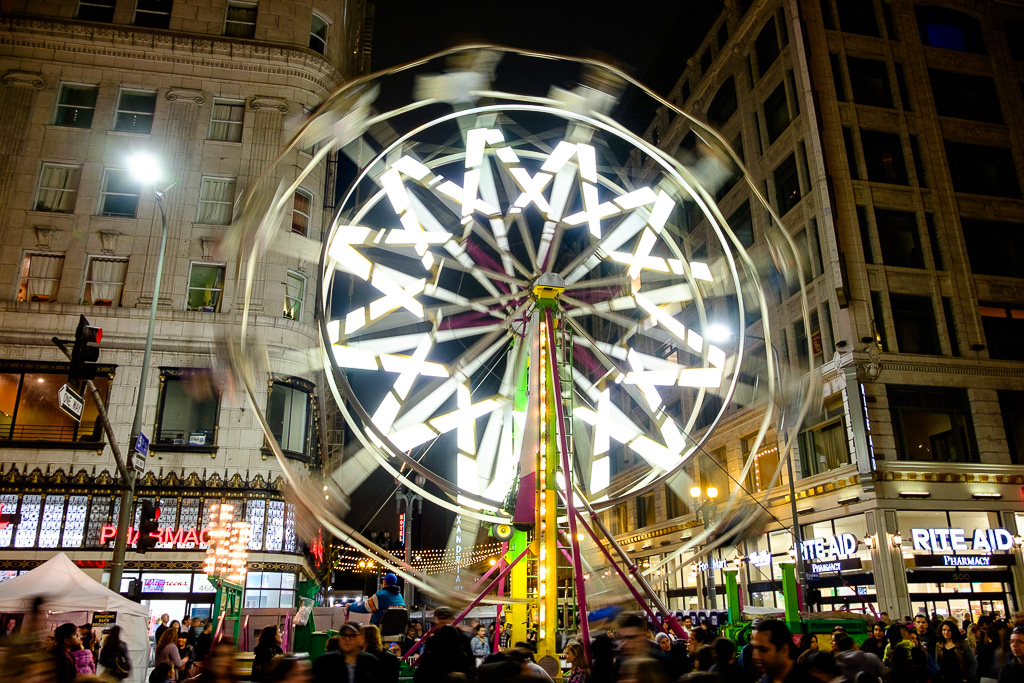
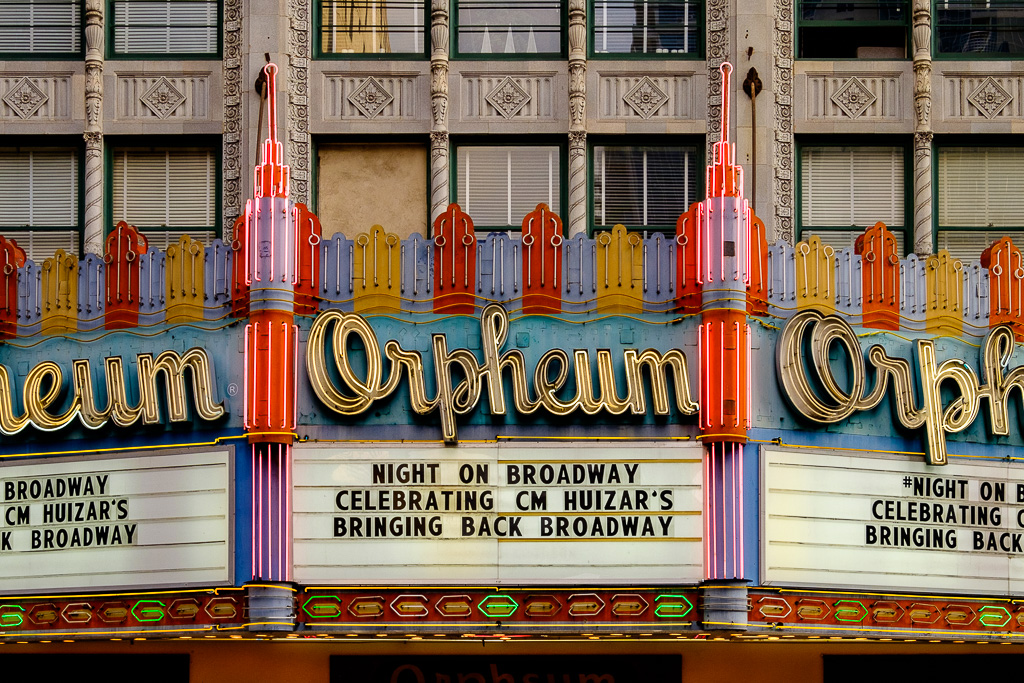
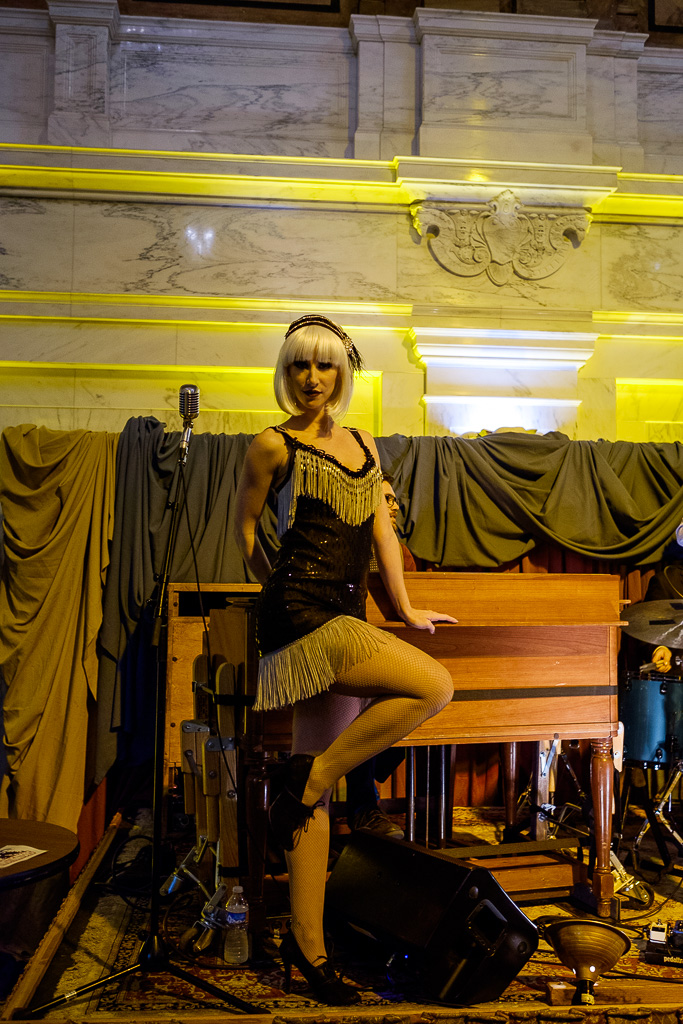
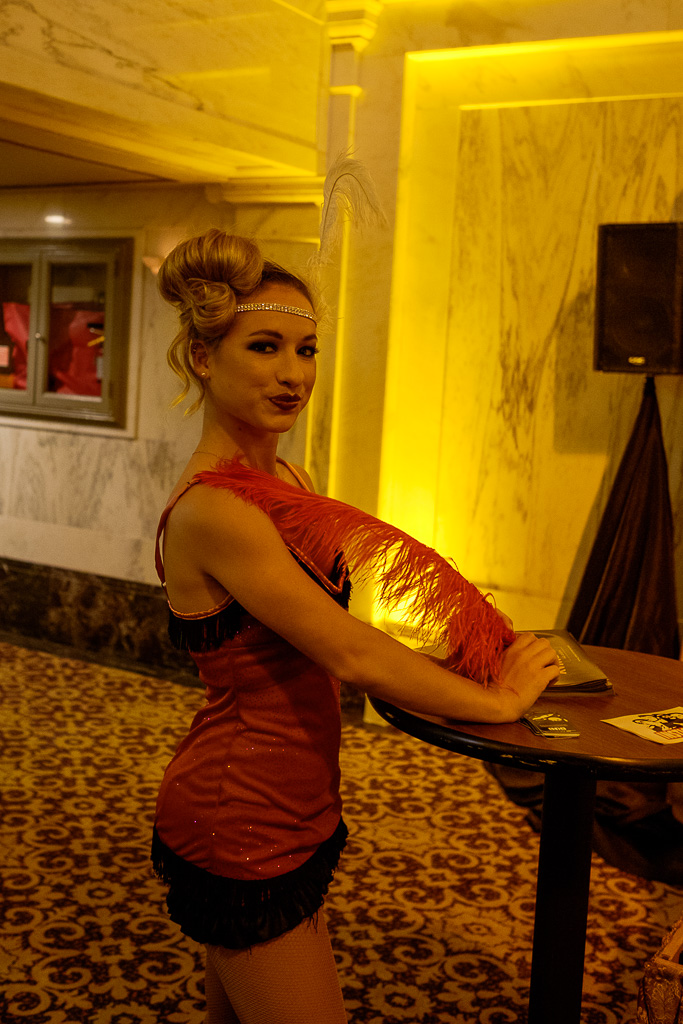
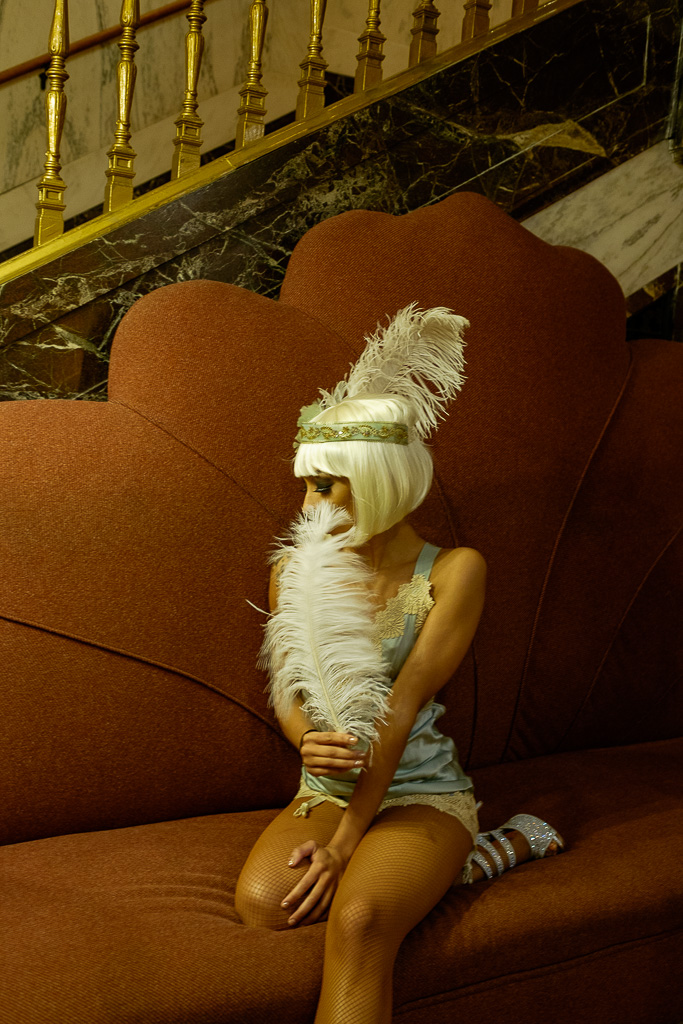
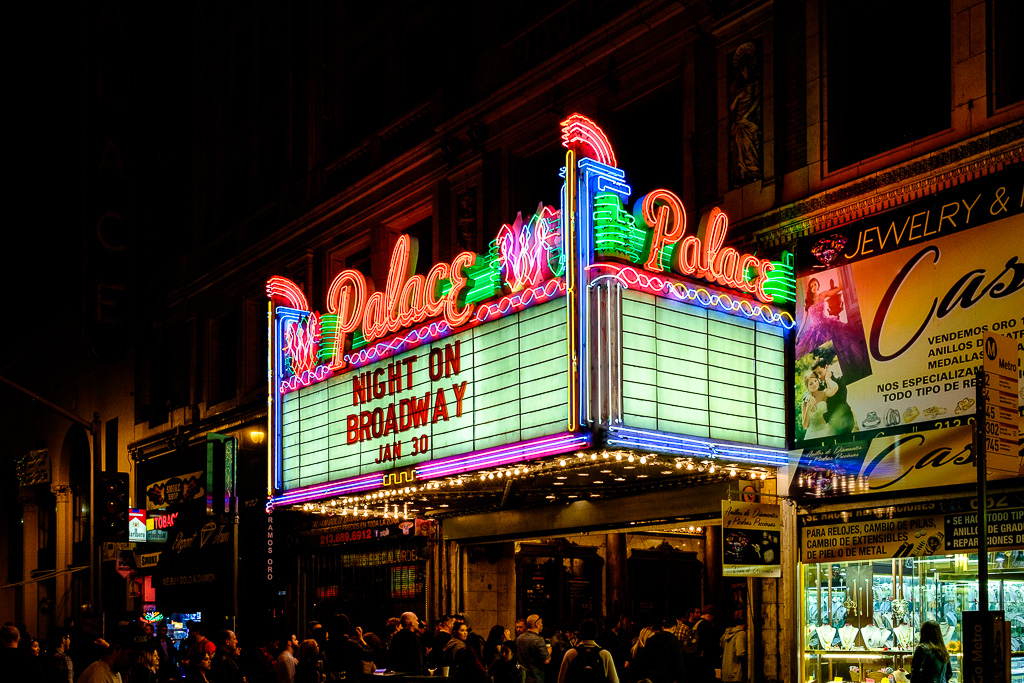
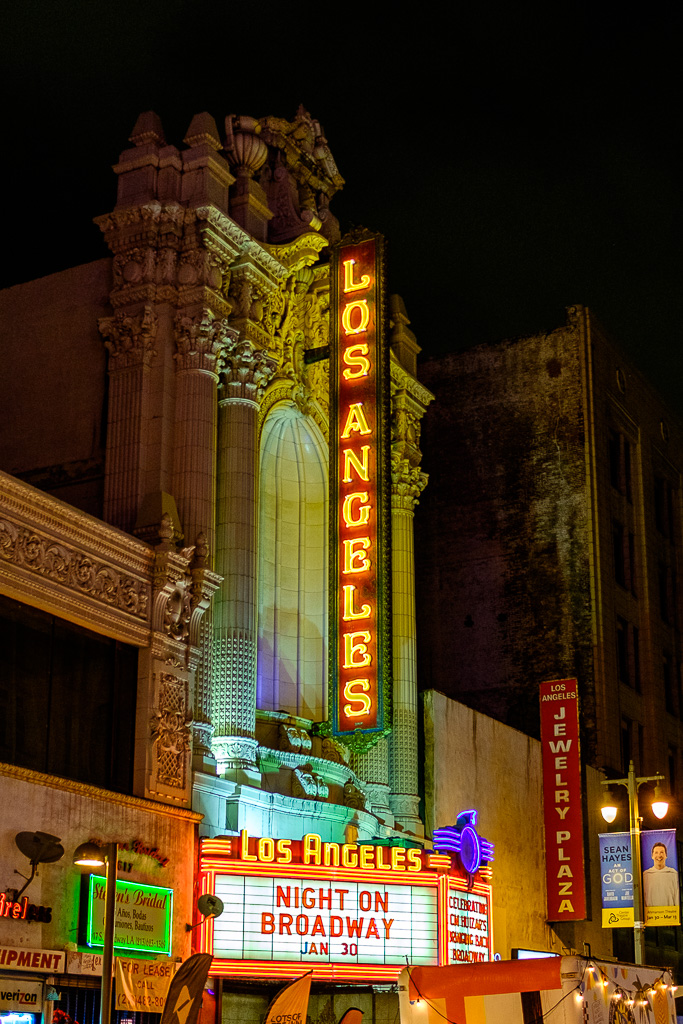
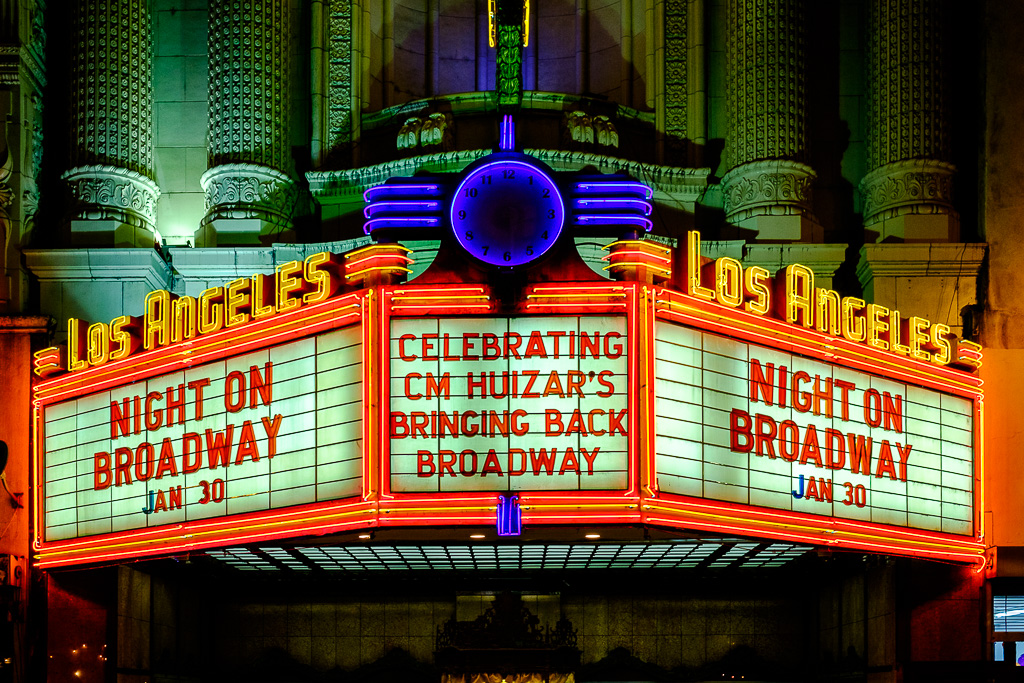
I attended the Night on Broadway event in January 2016. Most of shots in this set are from then.What a fantastic event. Bravo, L.A.! Read more about the effort downtown to bring back Broadway here and here. The balance of the set is from an earlier photo shoot in 2014, when I walked the area on a personal tour given to me by my uncle – my late father’s younger brother – which was truly special. Back in the 50s his office was once located in the old downtown right where these pictures were taken. Walking around there taking pictures and hearing first-hand his oral history of the downtown and how it used to be – just priceless.
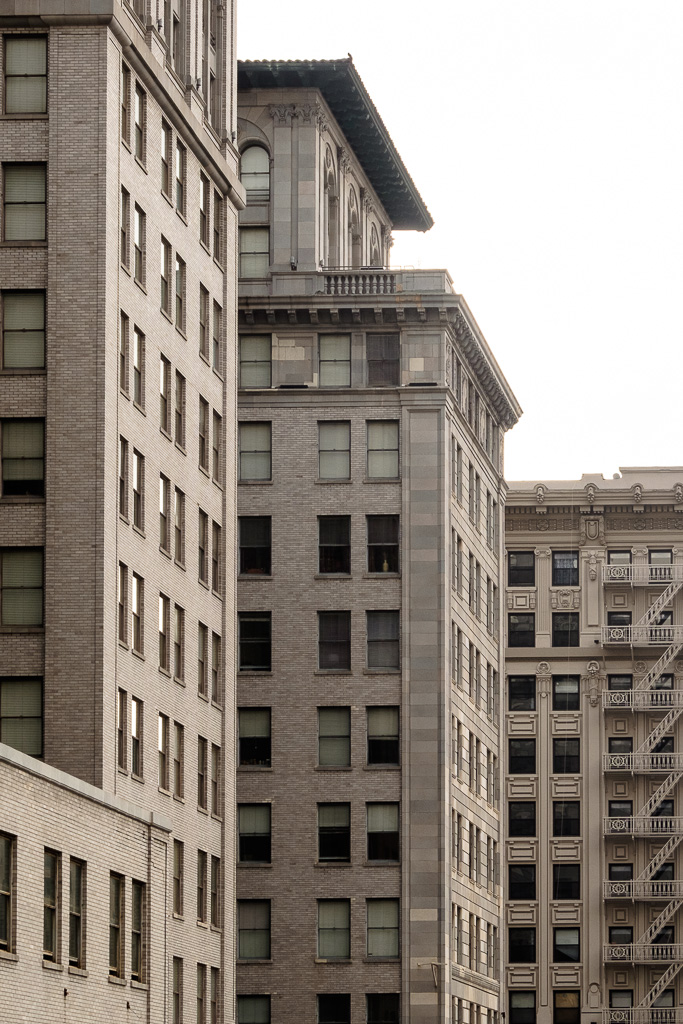
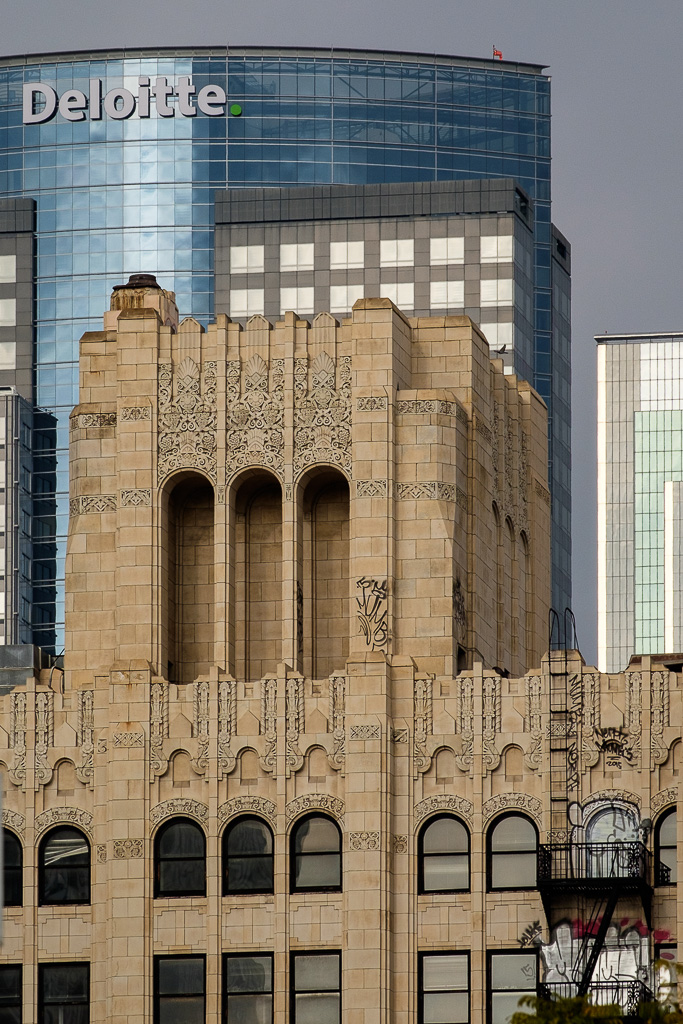
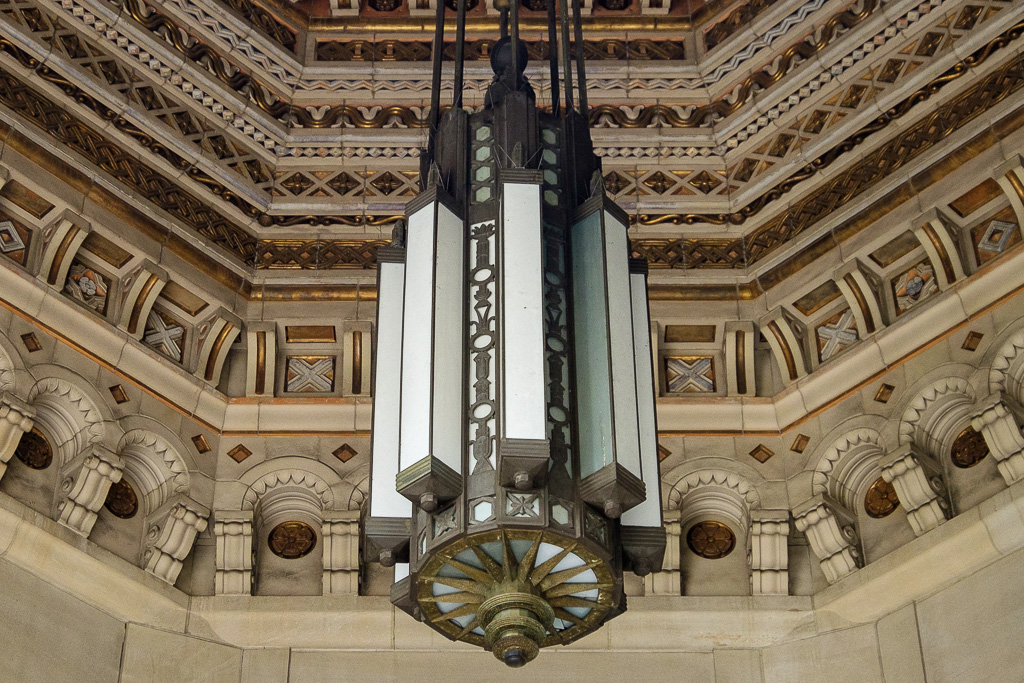
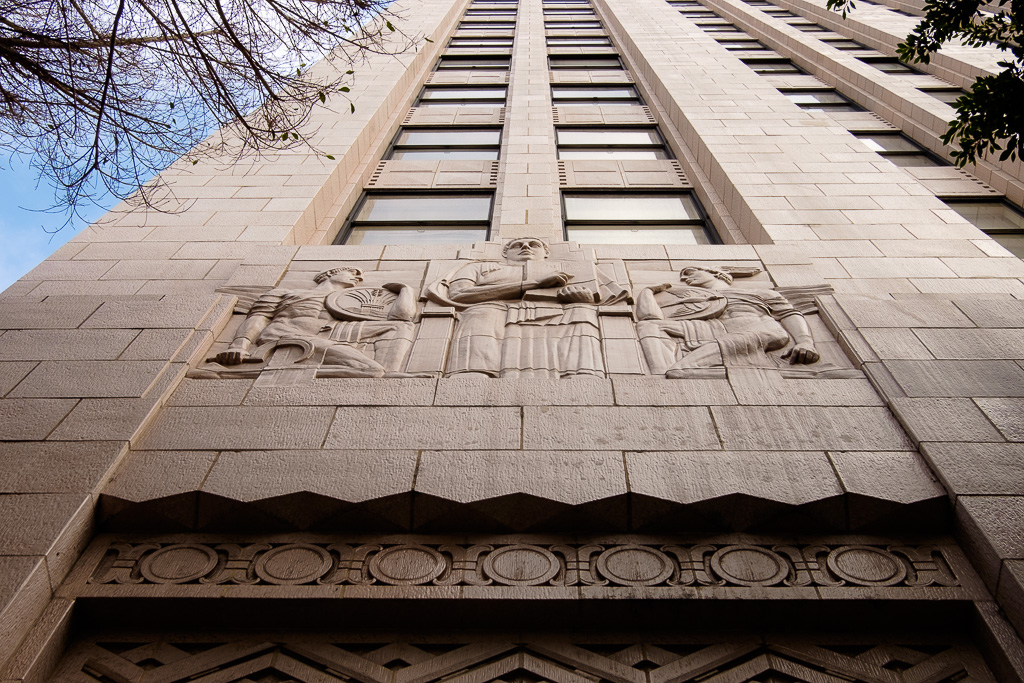
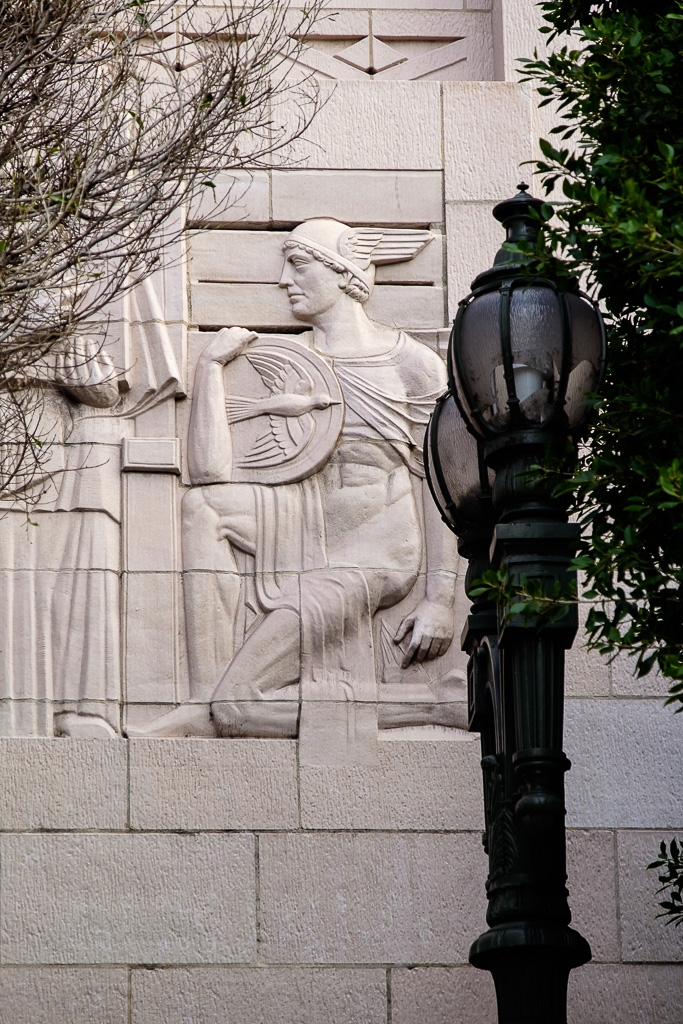
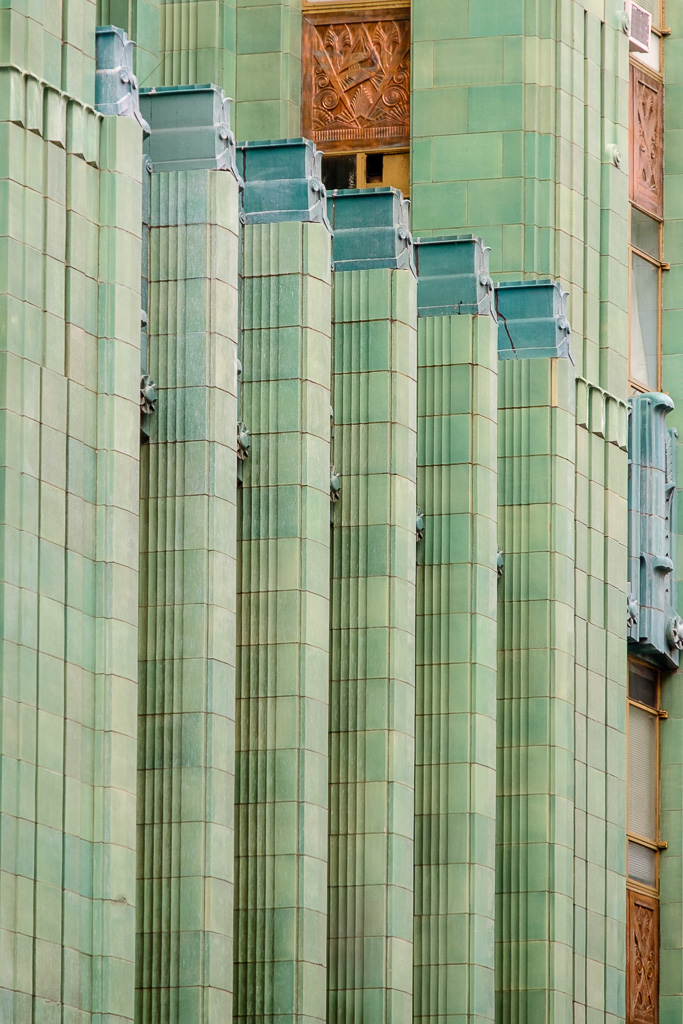
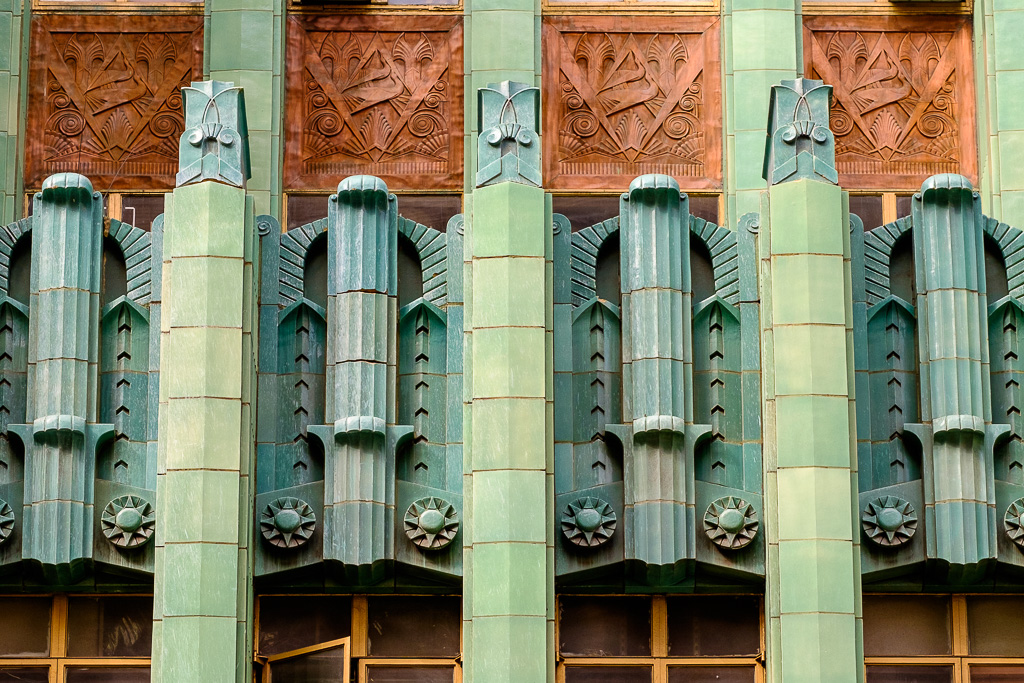
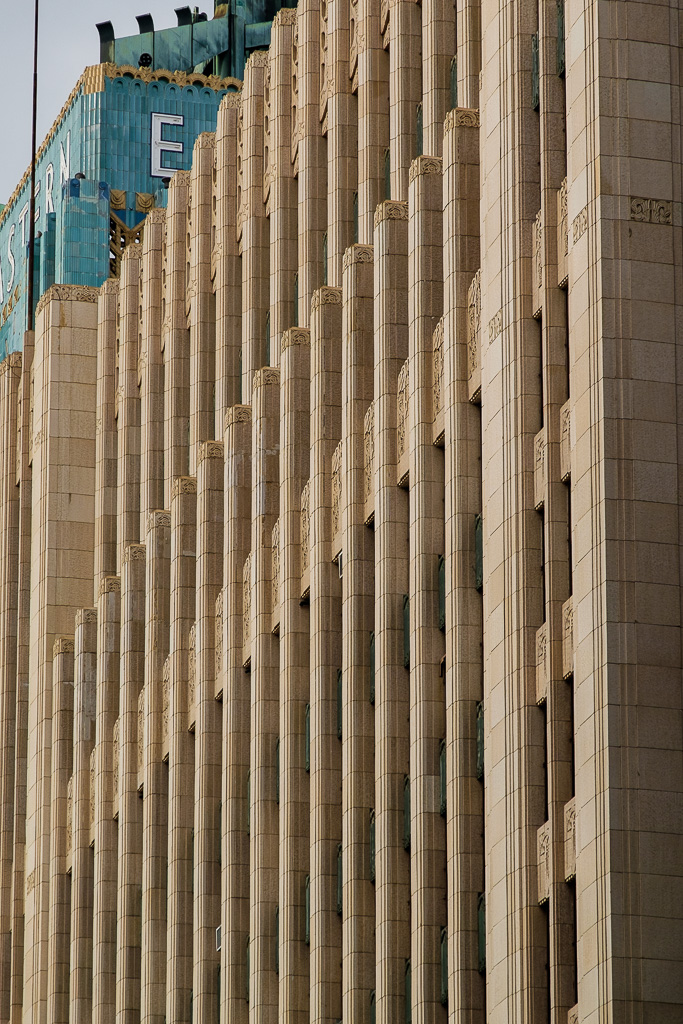
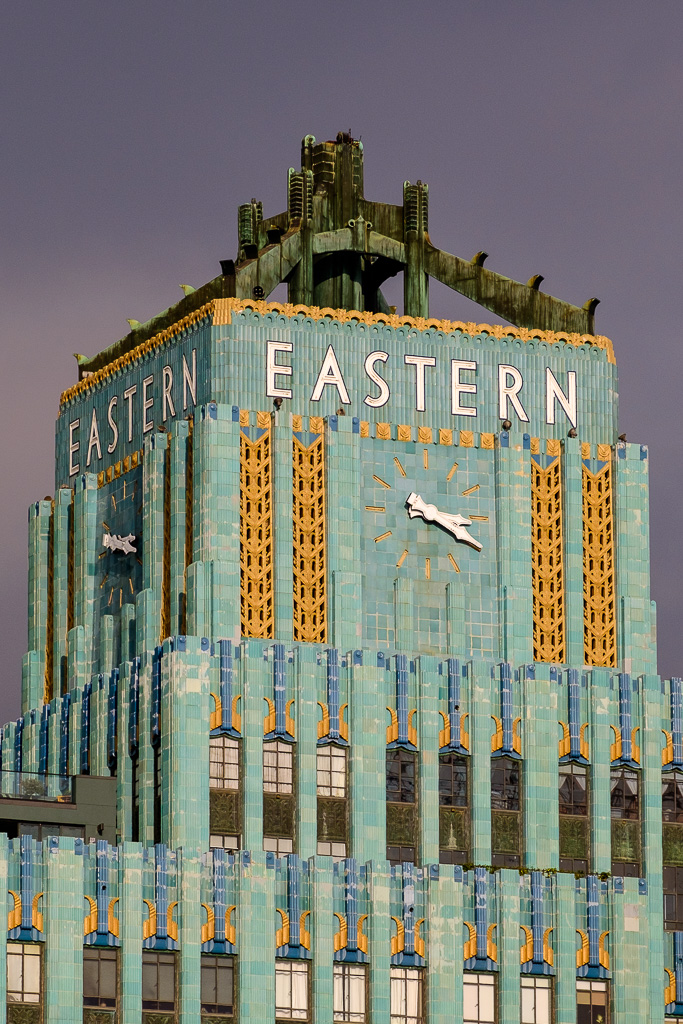
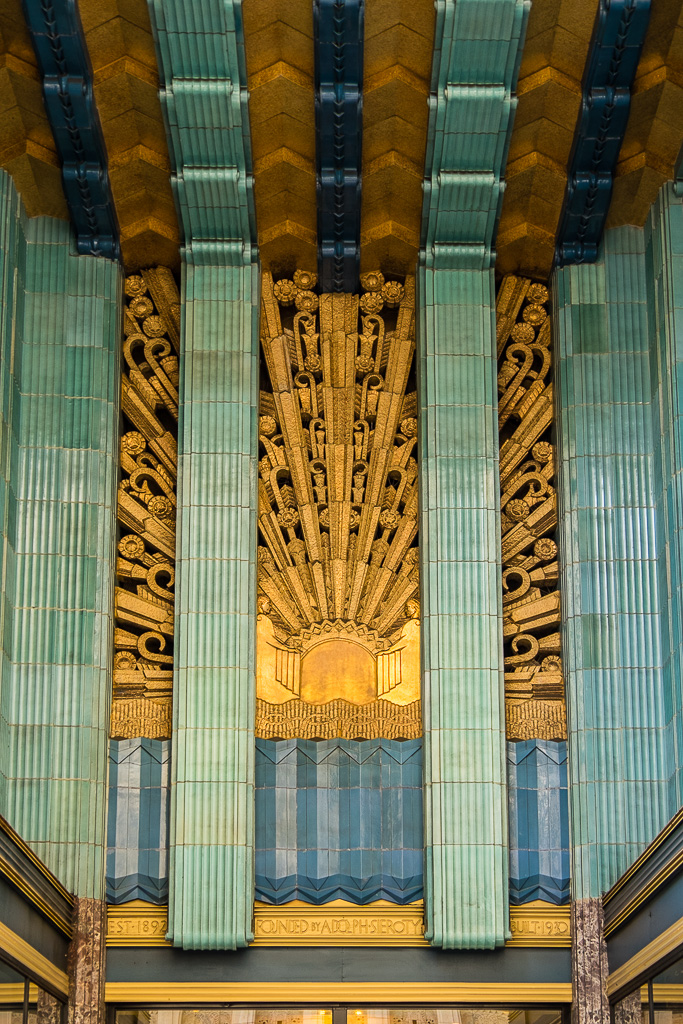
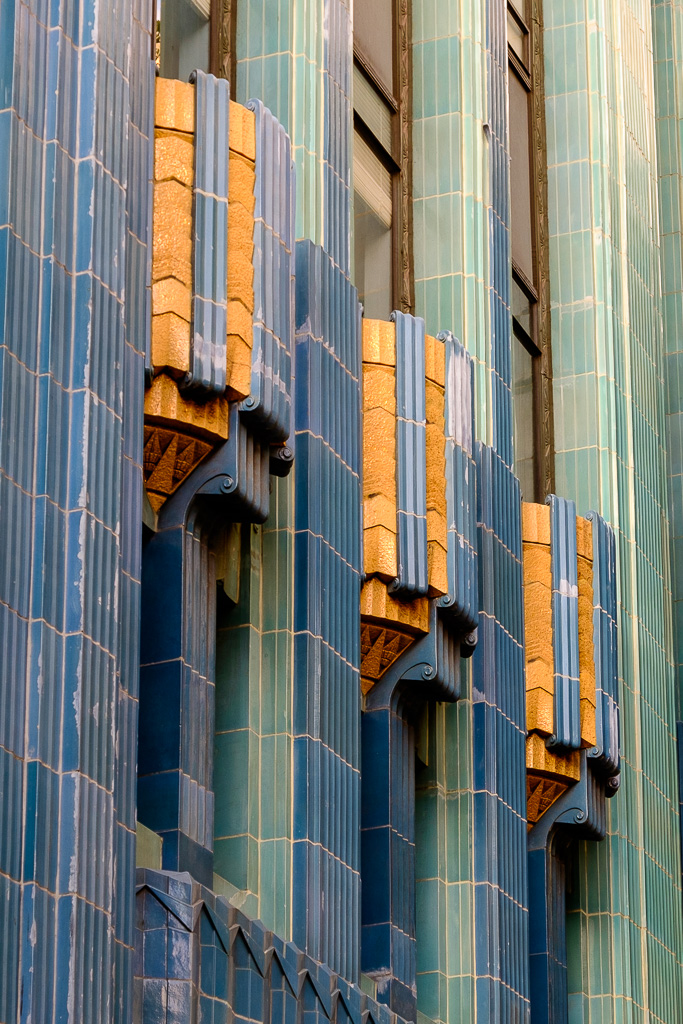
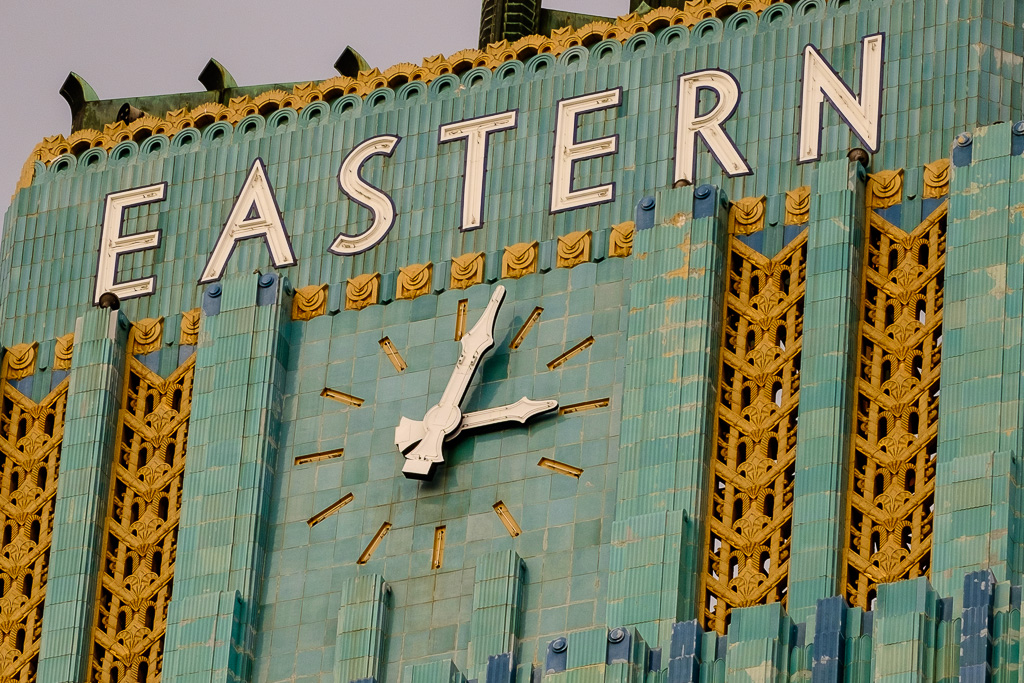
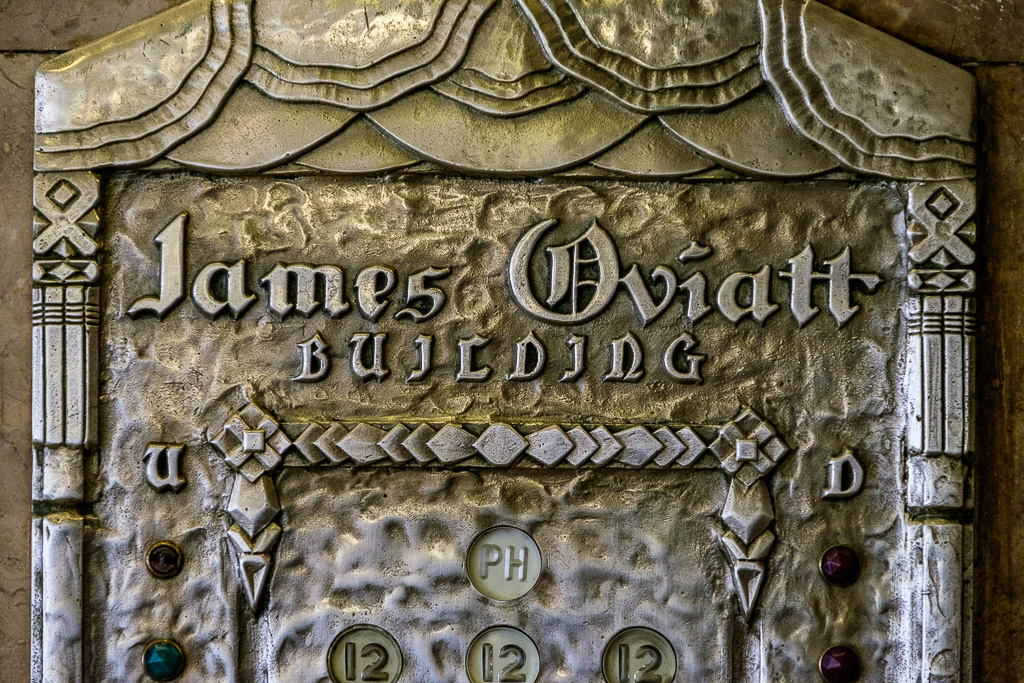
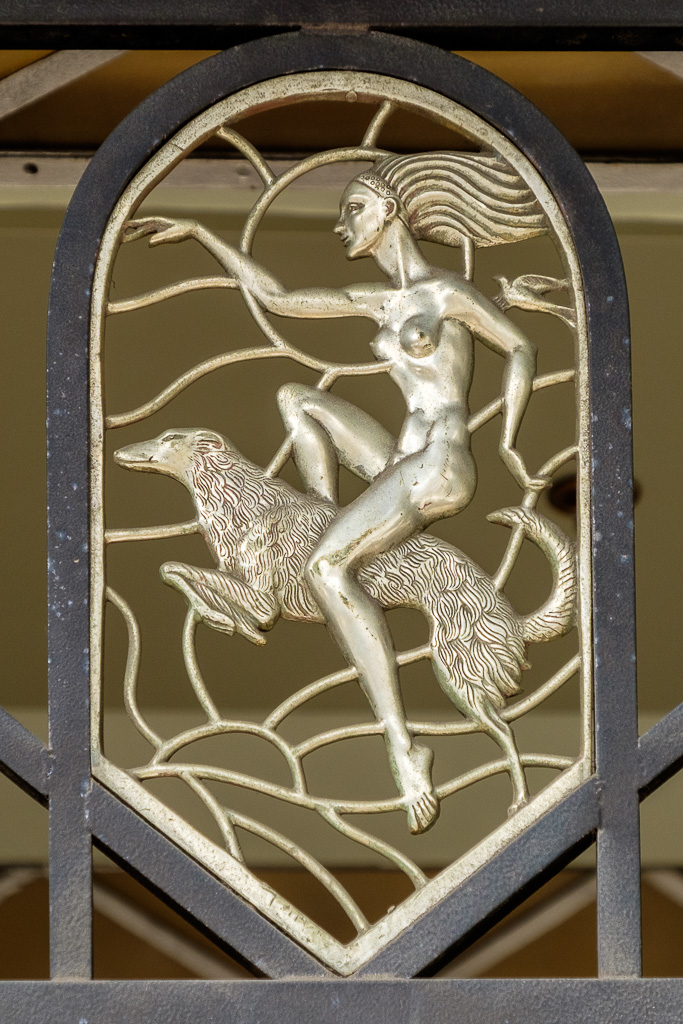
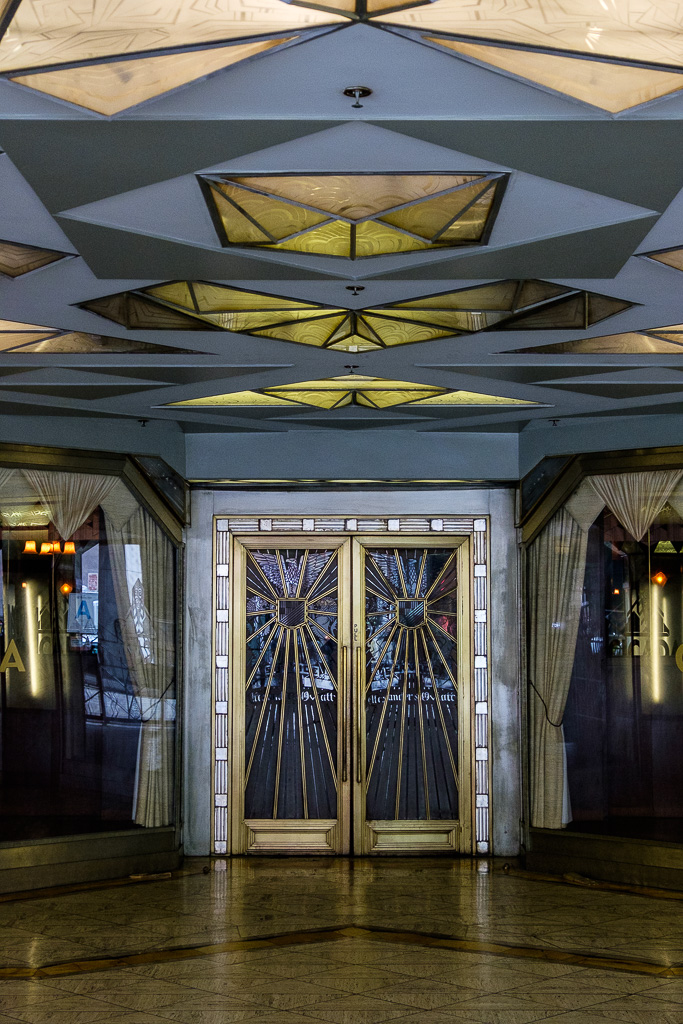
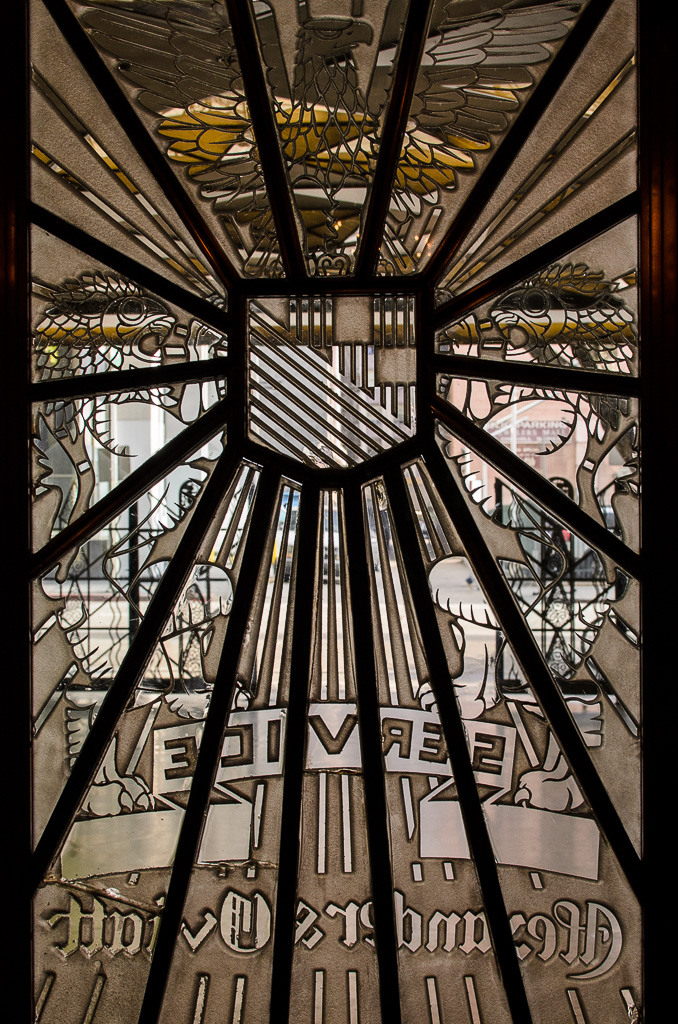
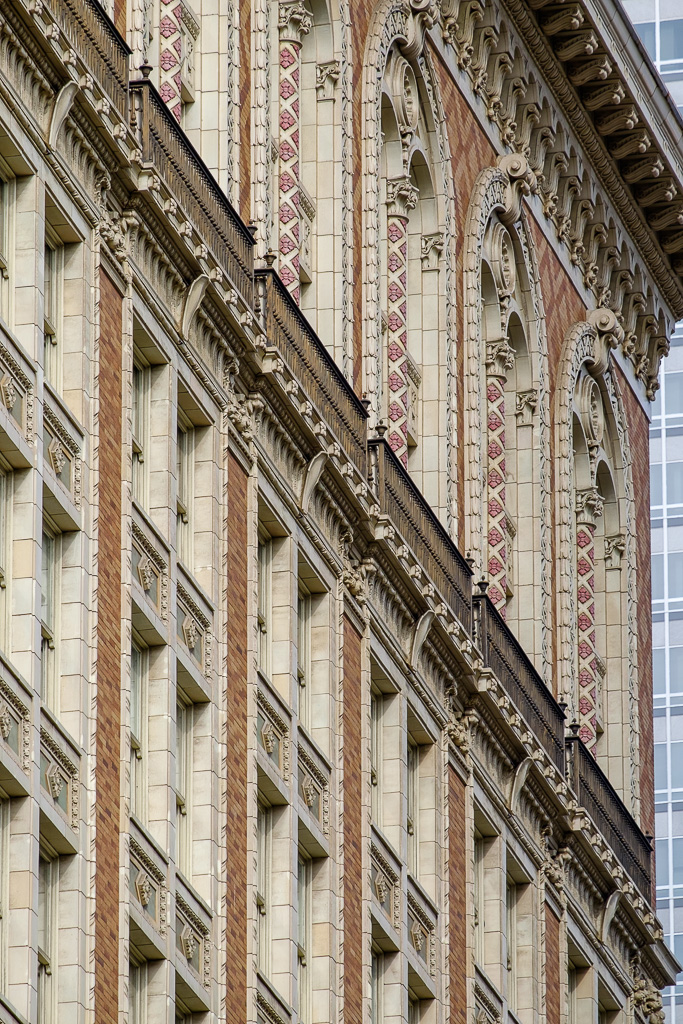
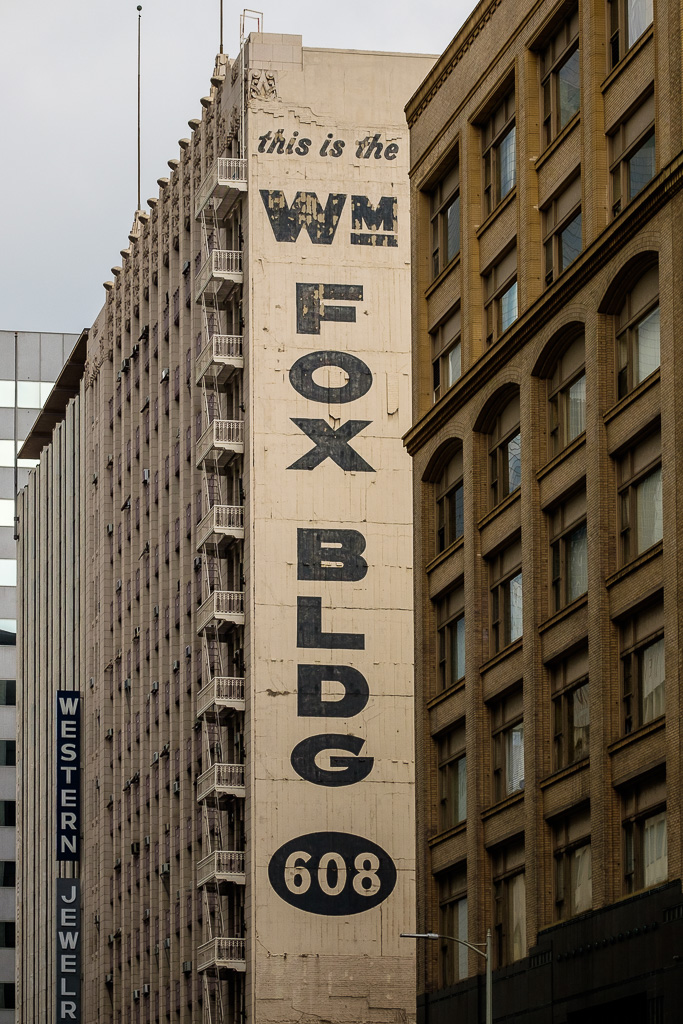
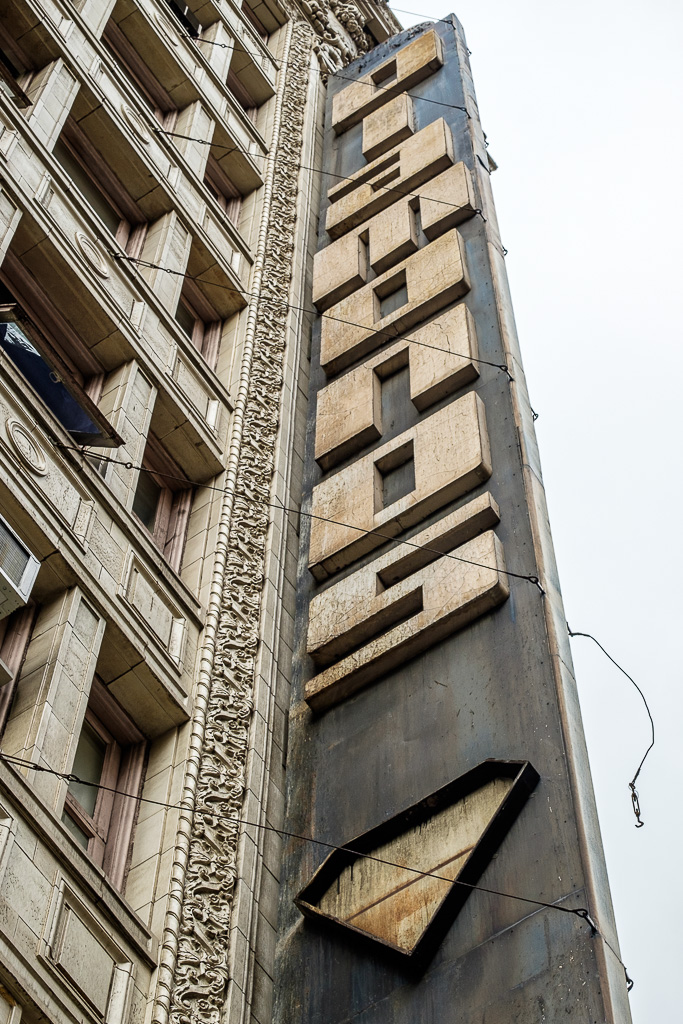
It’s not just theaters. The various downtown art deco is simply stunning. It is amazing how much still exists. There are not enough words for the incredible Oviatt building (1928). The Eastern Columbia Building (1930) is also something else – an unusual turquoise terra cotta exterior accented with blue and gold terra cotta – and has been saved (and restored) and is now residential. The light fixture in the set is at One Bunker Hill (1931) – once the headquarters of Southern California Edison. The Title Guarantee & Trust Building (1930) at Pershing Square is a personal favorite. This deco masterpiece was designed by John B. and Donald D. Parkinson, whose other work includes Los Angeles City Hall and Bullocks Wilshire. Read more about L.A. deco here and here. It’s without a doubt one of the finest concentrations of art deco architecture in the country. There are walking tours.
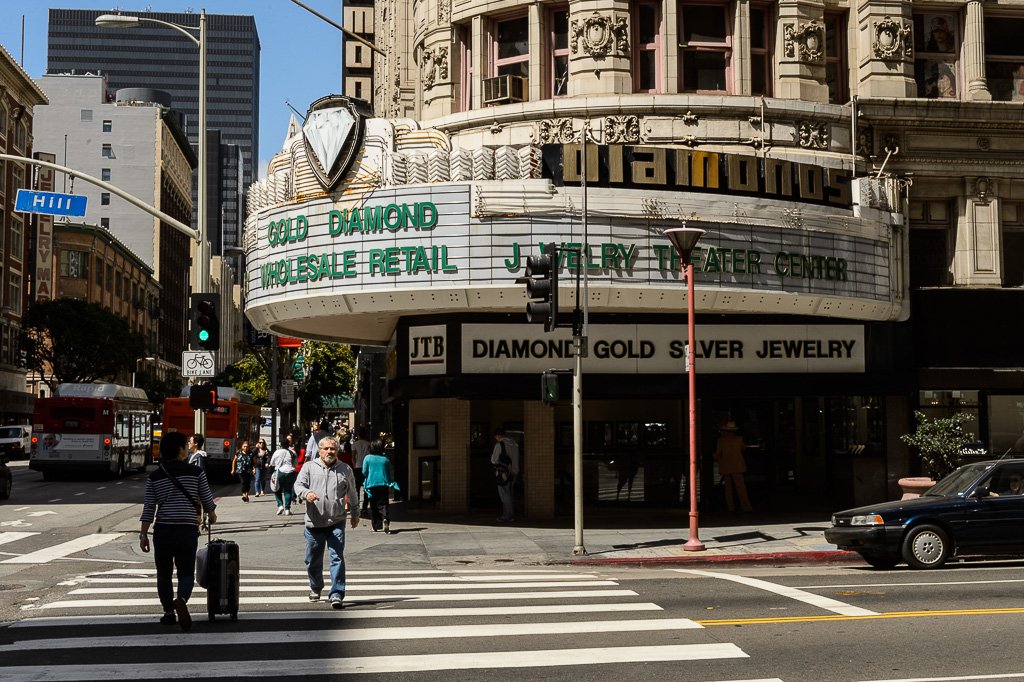
Many of the deco buildings are now part of the jewelry district.
The set below has more photos than I usually include in a post, but it is truly an abundance of riches there. It is the first and largest historic theater district on the National Register of Historic Places. These are just a glimpse of what is downtown, of what Route 66 motorists would have seen. There is so much more I could have included. The area is a photographer’s dream – whether movie palaces, deco or just street photography. I will do some galleries eventually with more downtown L.A., including the library.
For those interested, after the set, I will include below some more information on the Broadway theaters.
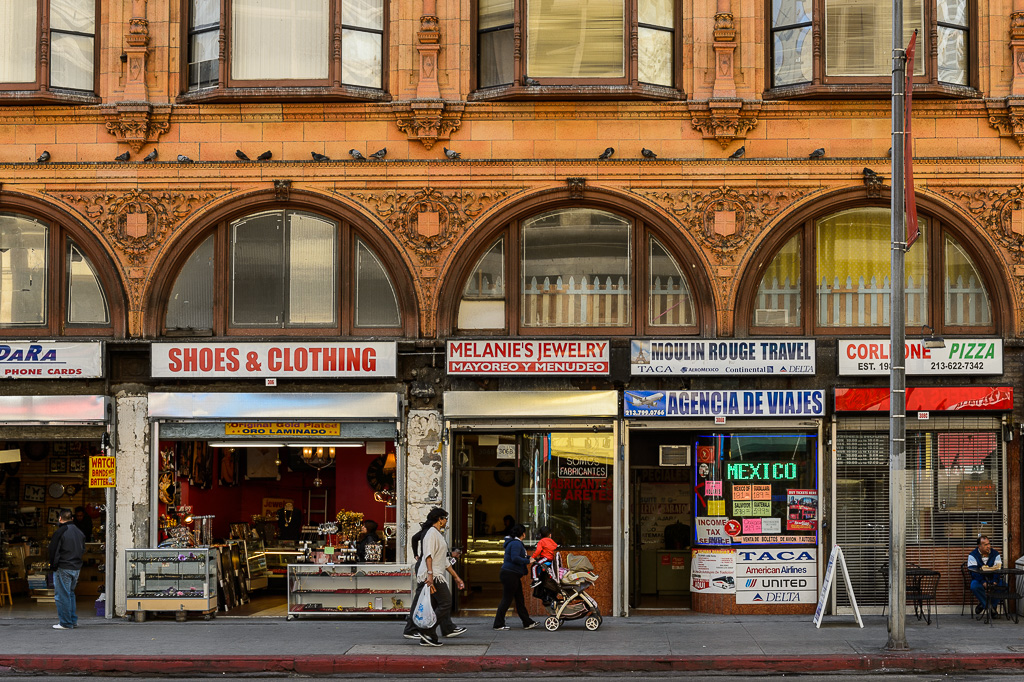
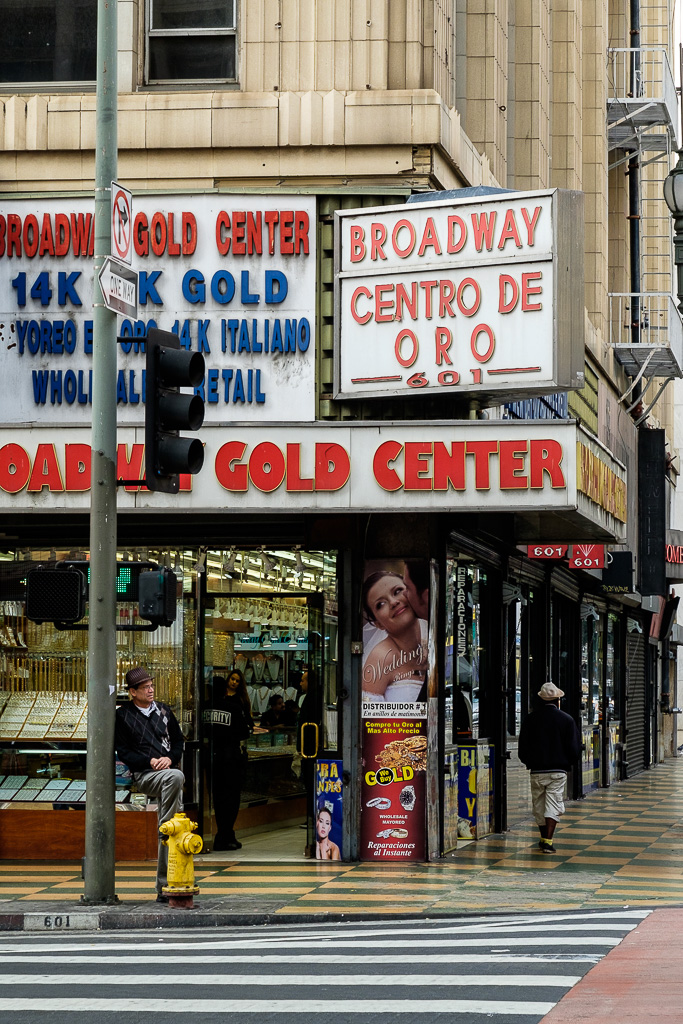
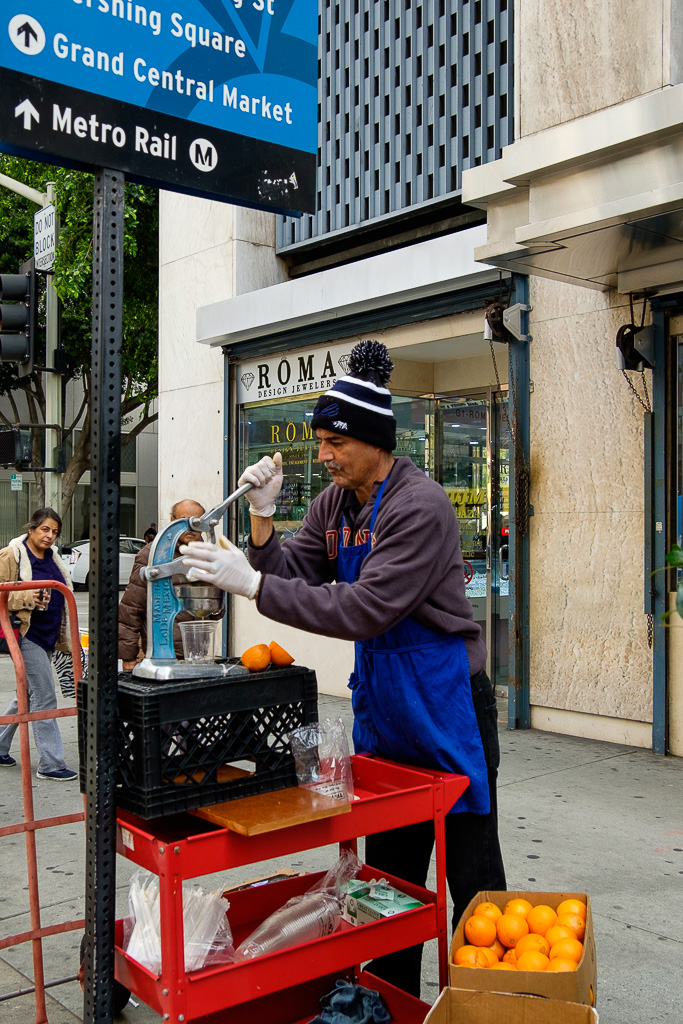
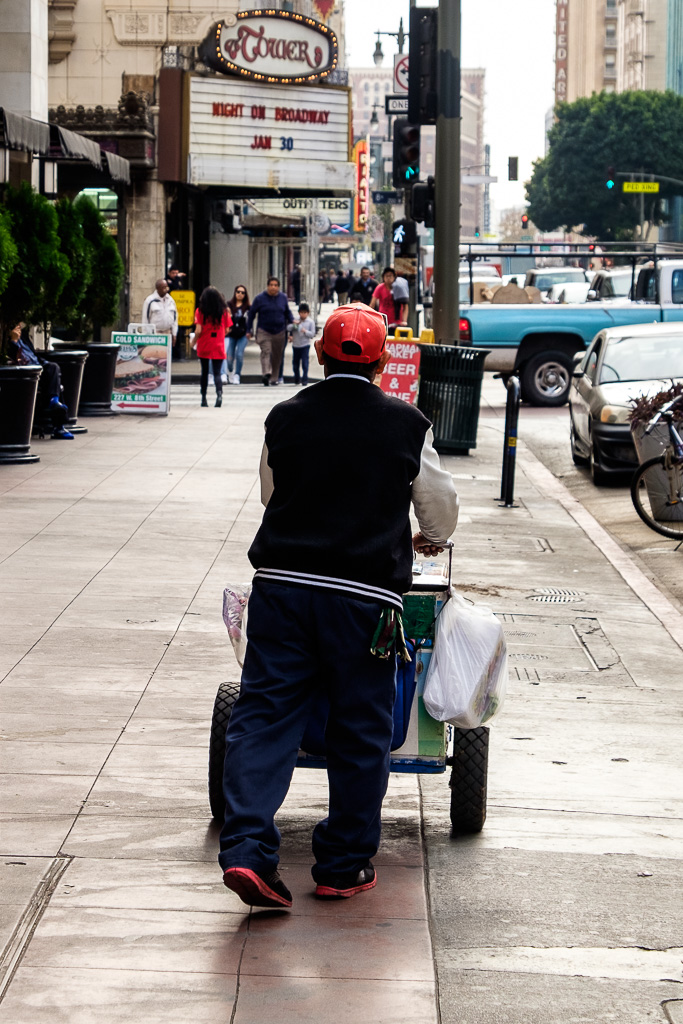
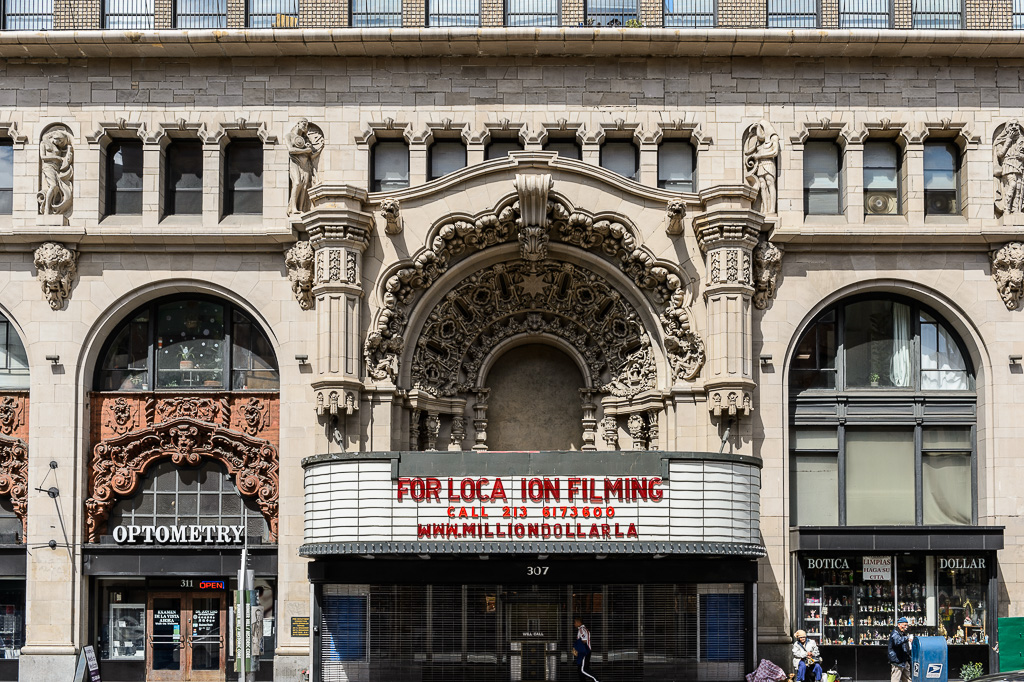
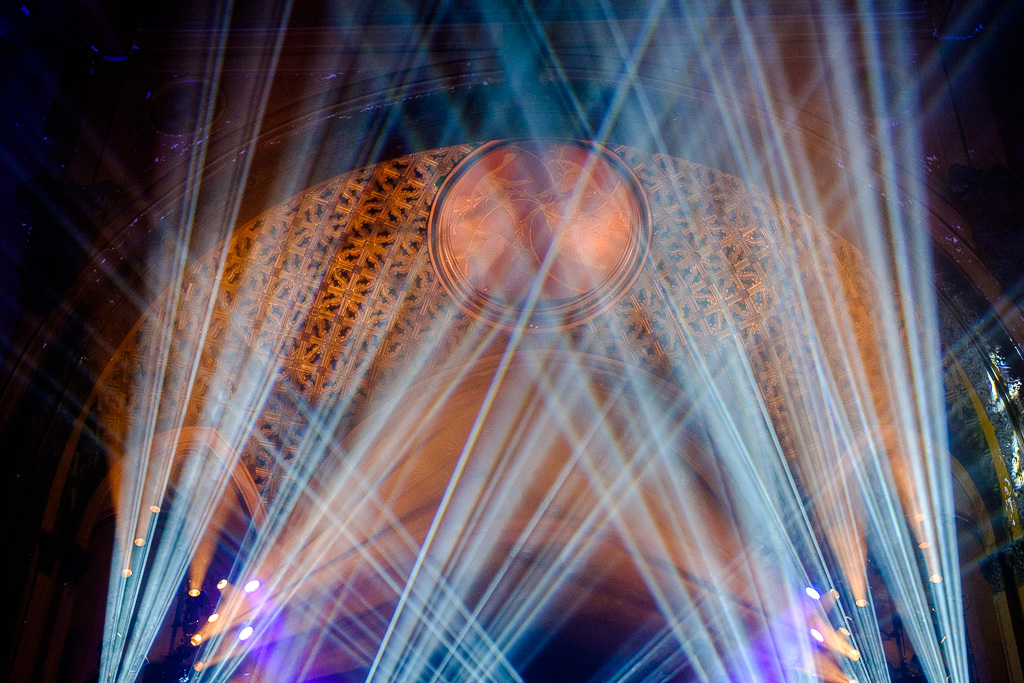
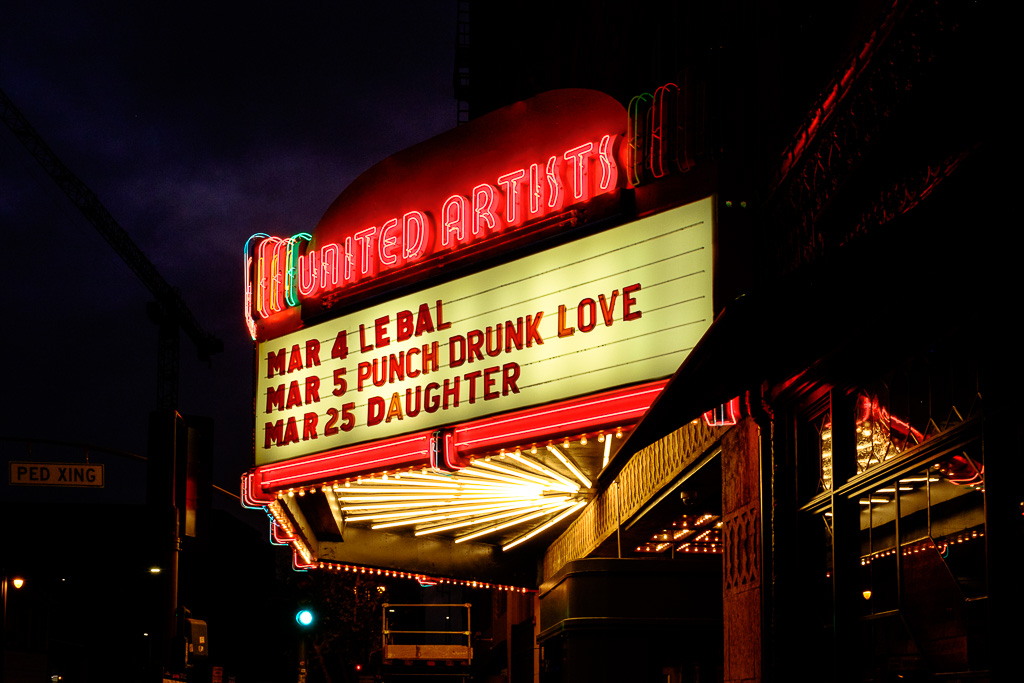
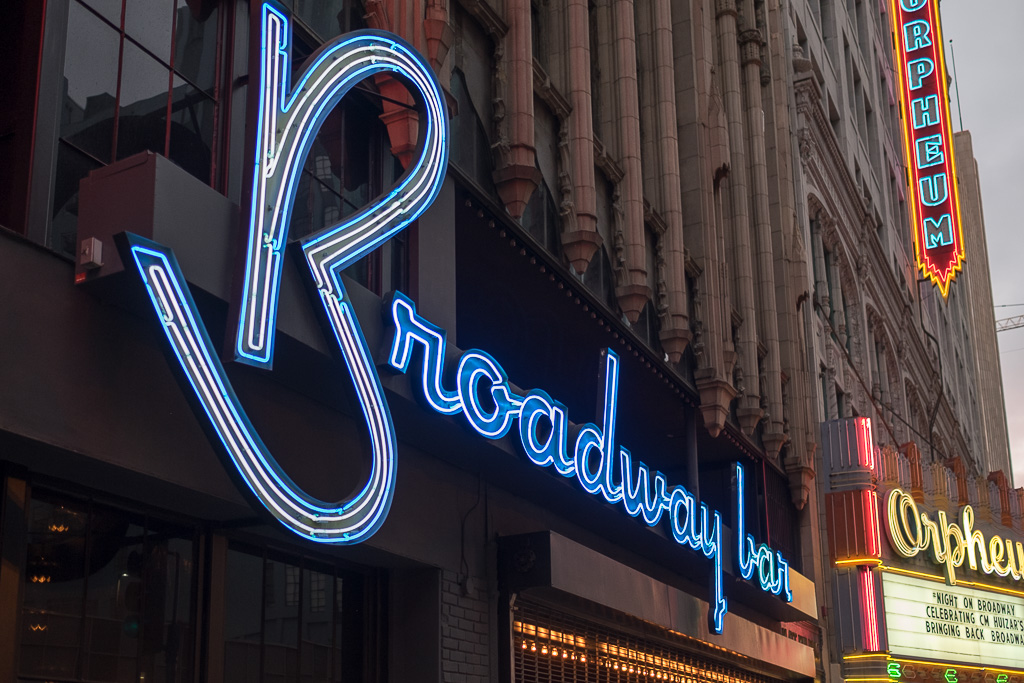
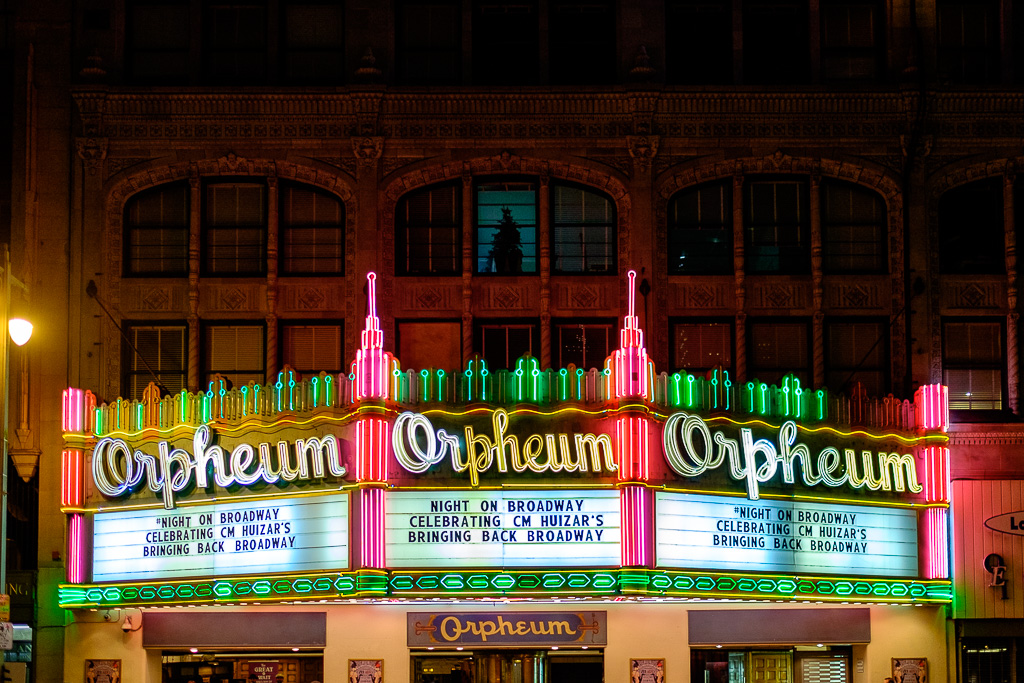
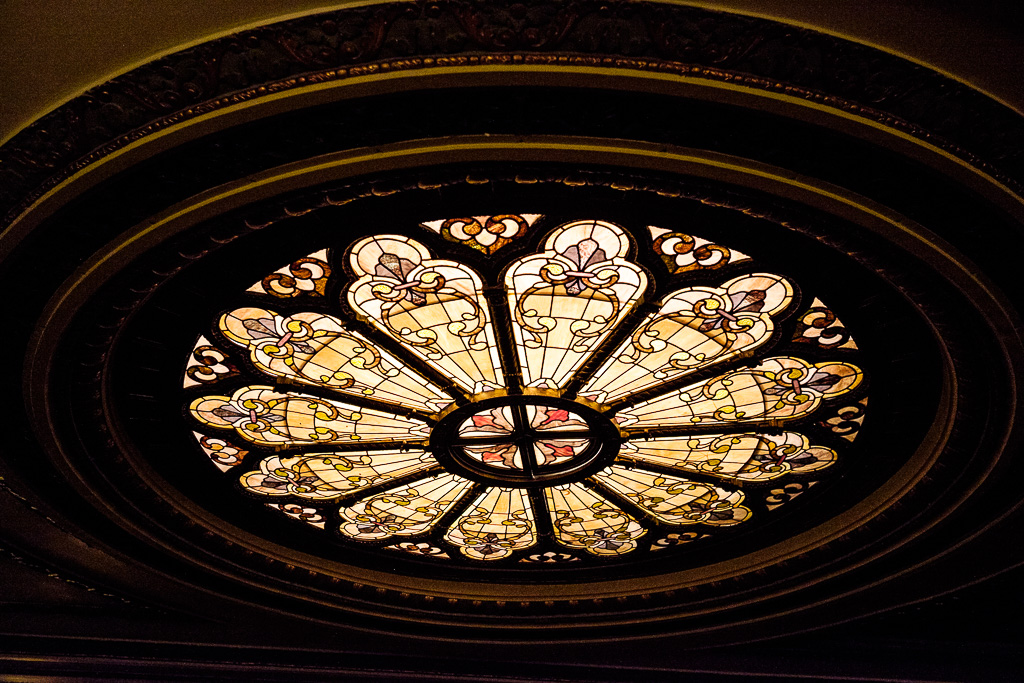
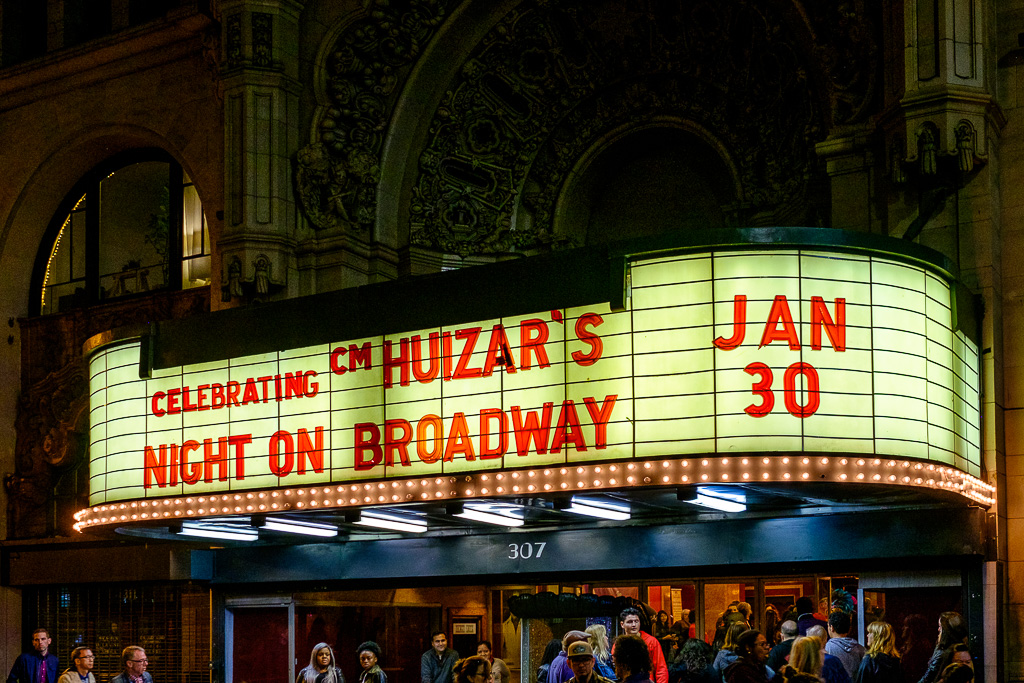
*Million Dollar Theater, 307 S. Broadway, built by Sid Grauman and opened in 1918 (right next to Grand Central Market). Closed 1993. It’s used for location filming, movie screenings and special events.
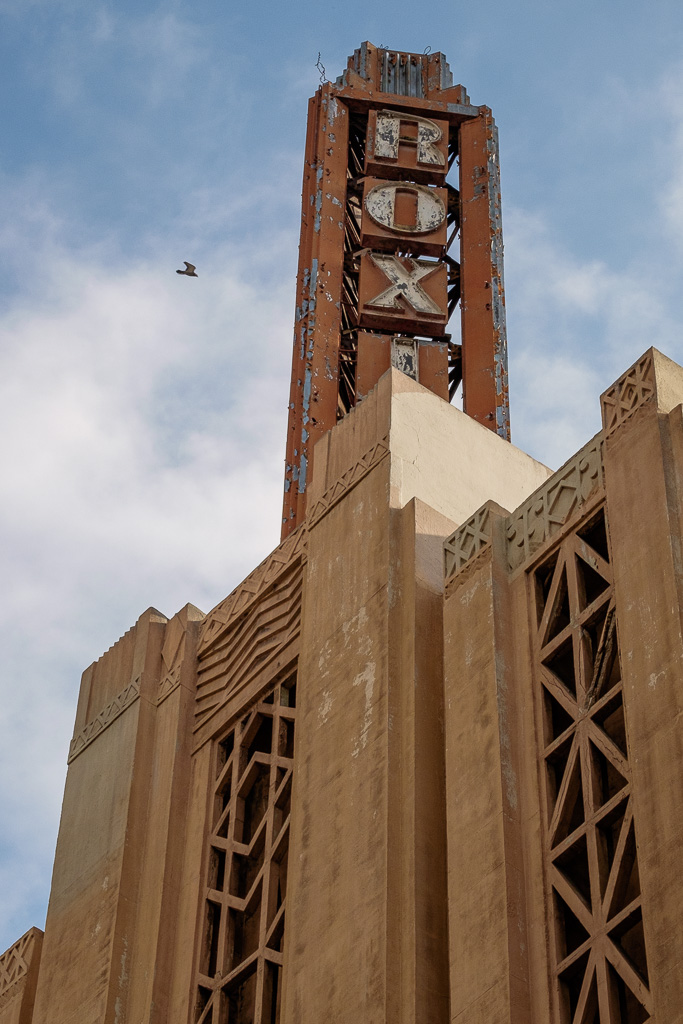
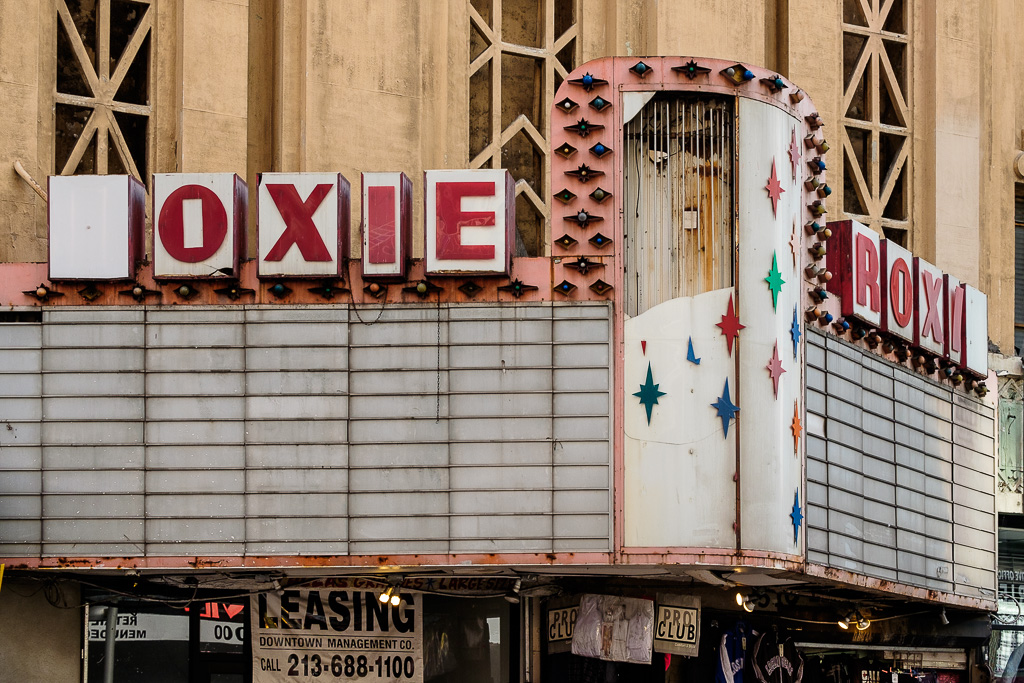
Roxie Theater, 518 S. Broadway, built in 1932 and the last of the 30s theaters built on Broadway. Closed 1991. Currently used for retail.
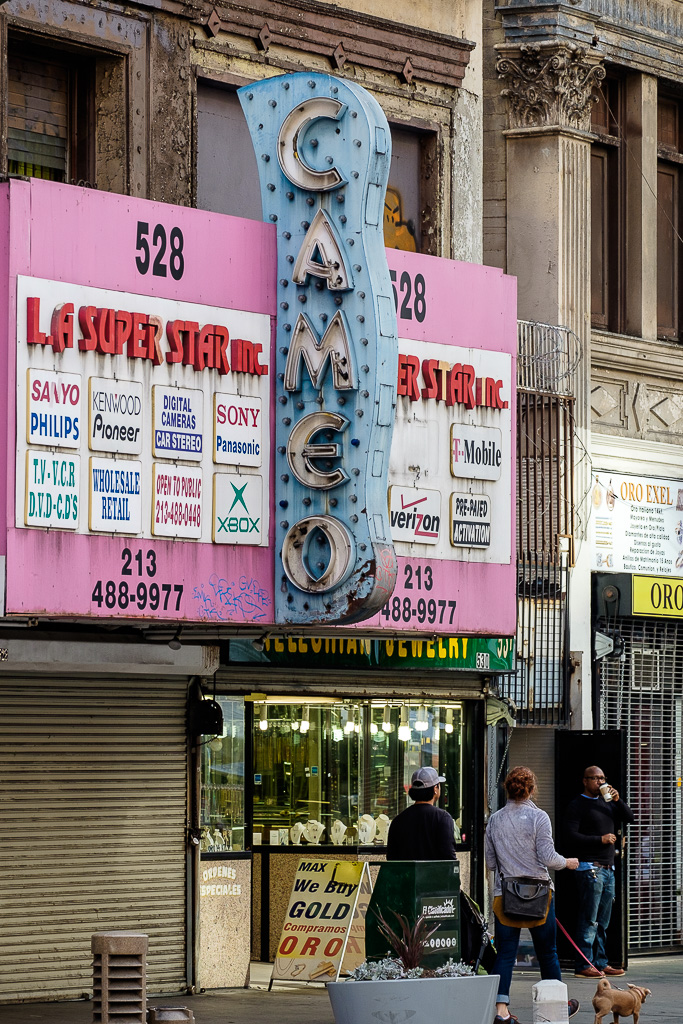
Cameo Theater, 528 S. Broadway, which dates back to 1919 (it opened as Clune’s Broadway Theatre) and at the time it was closed (also in 1991) was the oldest continuously operating movie theater in California. Now retail space.
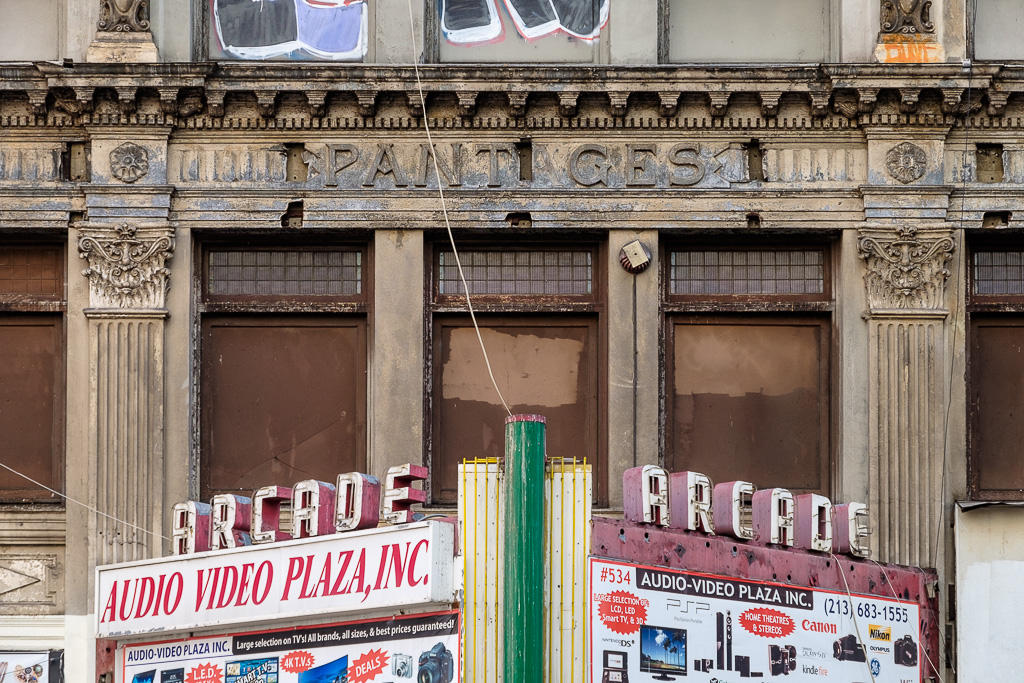
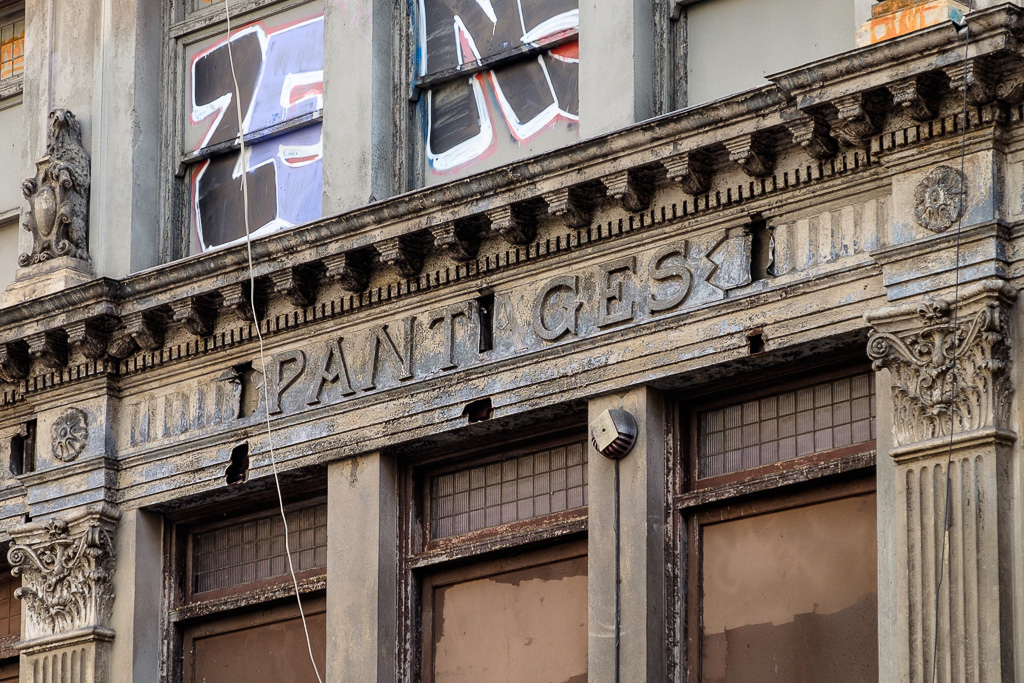
Arcade Theater, 534 S. Broadway, opened in 1910 as a Pantages vaudeville house. Closed since 1992. Currently retail space.
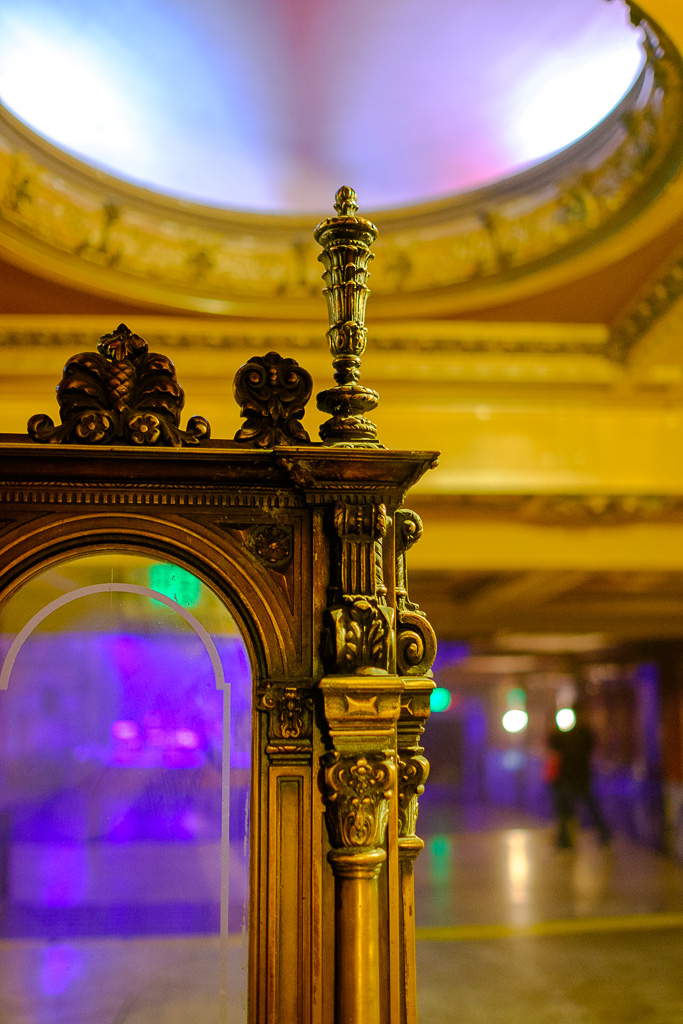
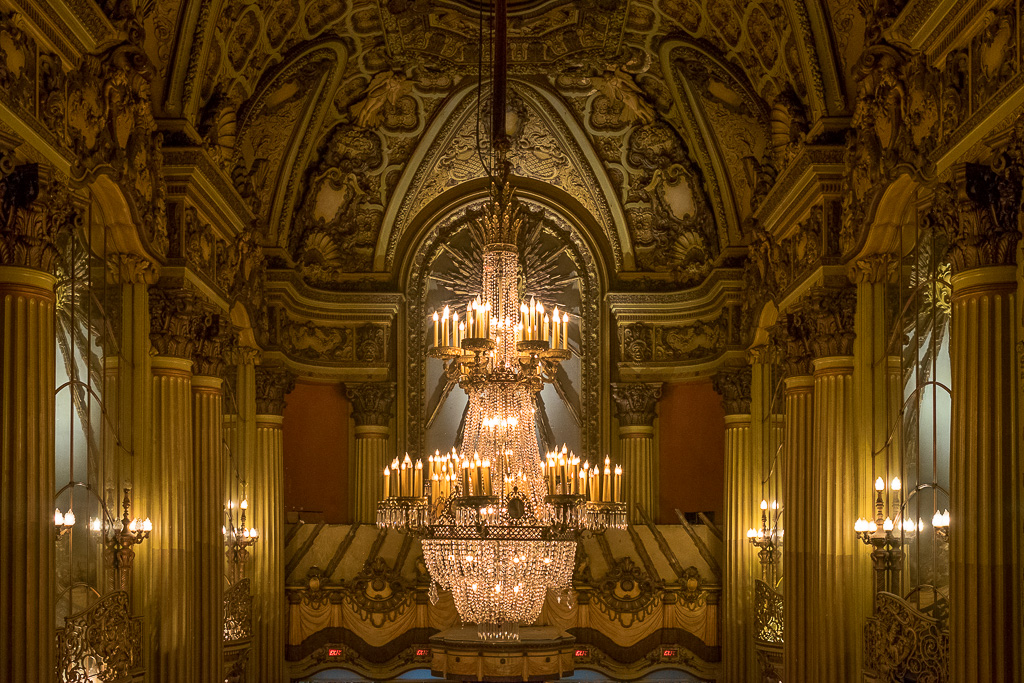
*Los Angeles Theatre, 615 S. Broadway, opened in 1931 (with the premiere of Charlie Chaplin’s City Lights) and modeled on San Francisco’s late, great Fox Theater on Market. It has been called “a movie house for the gods” and was the last great movie palace built on Broadway. It closed in 1994. Now owned by the Broadway Theatre Group (the first of their four properties mentioned here), it is used as a performing arts venue and for location filming and special events (as well as the occasional movie). This one is a real beauty. The Versailles-like interior shot is the Los Angeles.
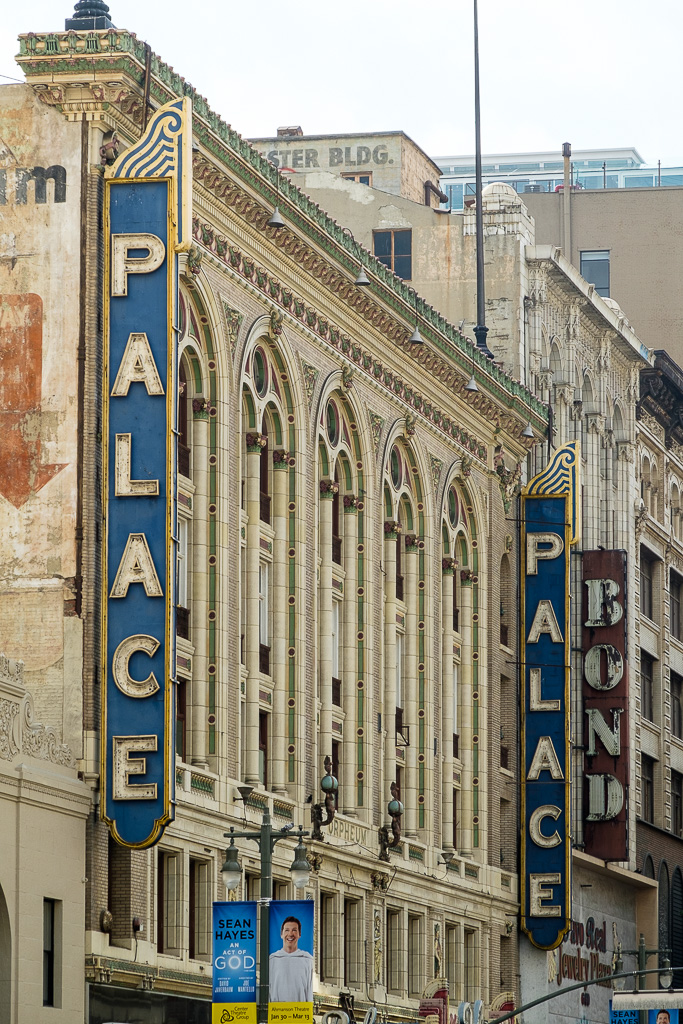
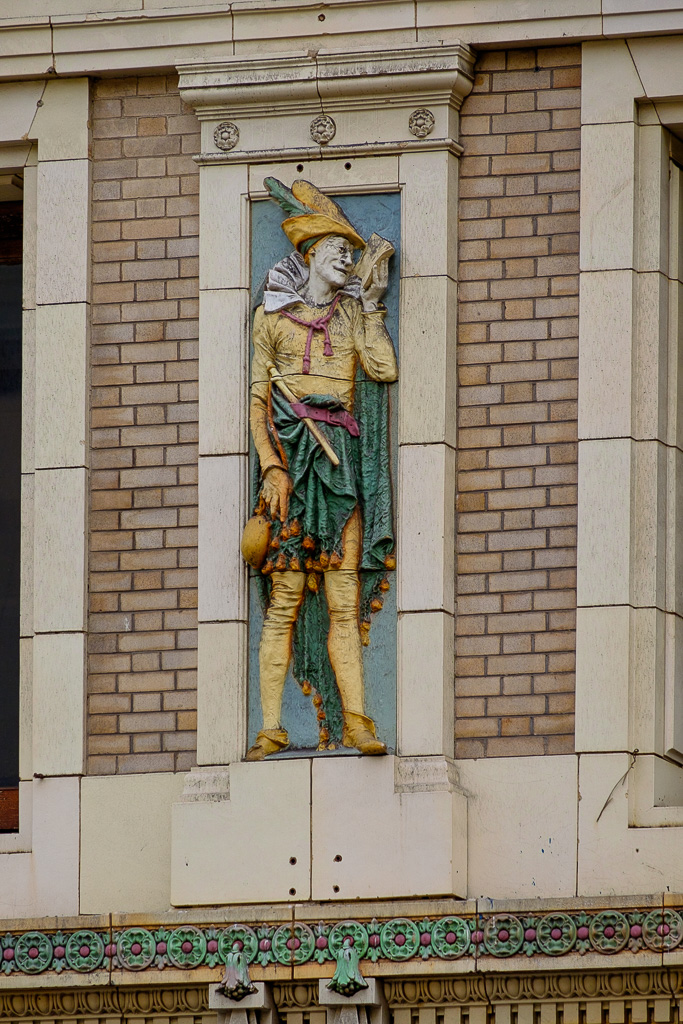
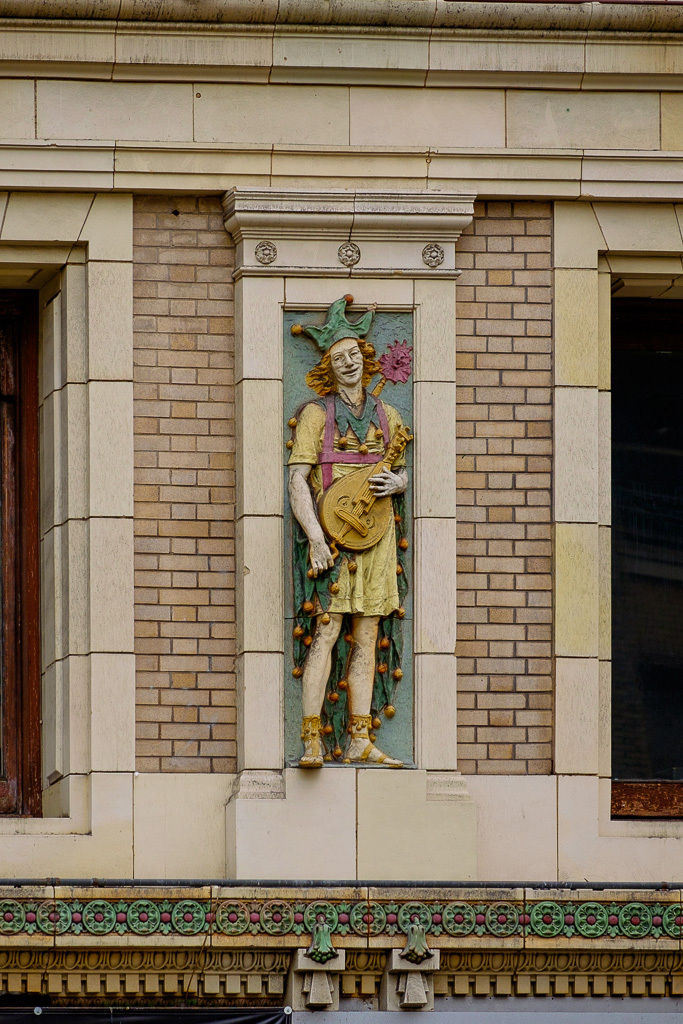
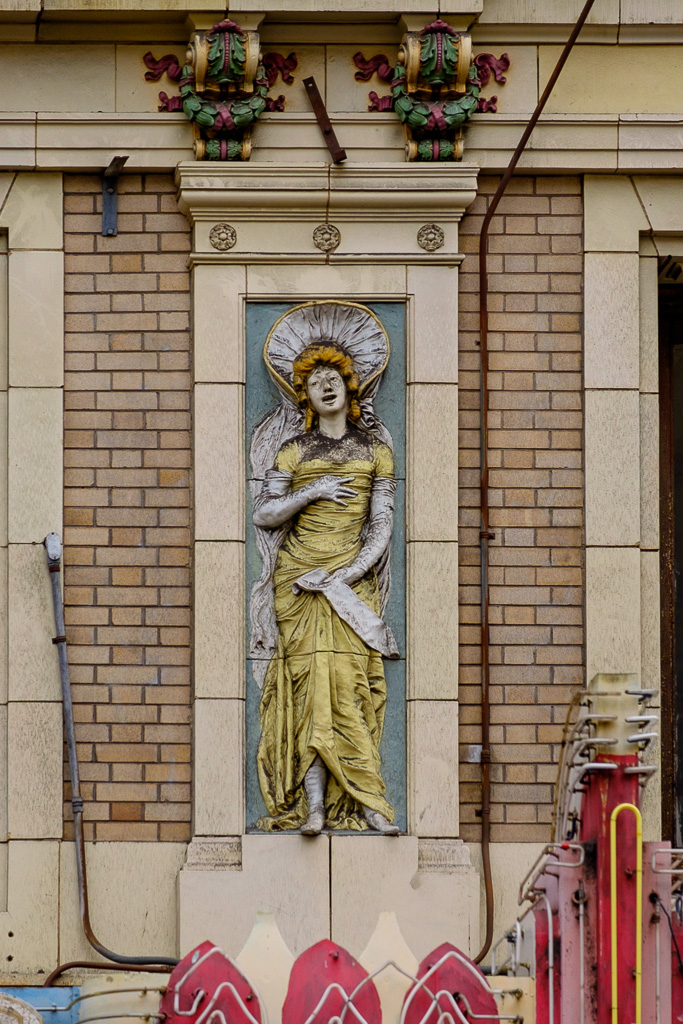
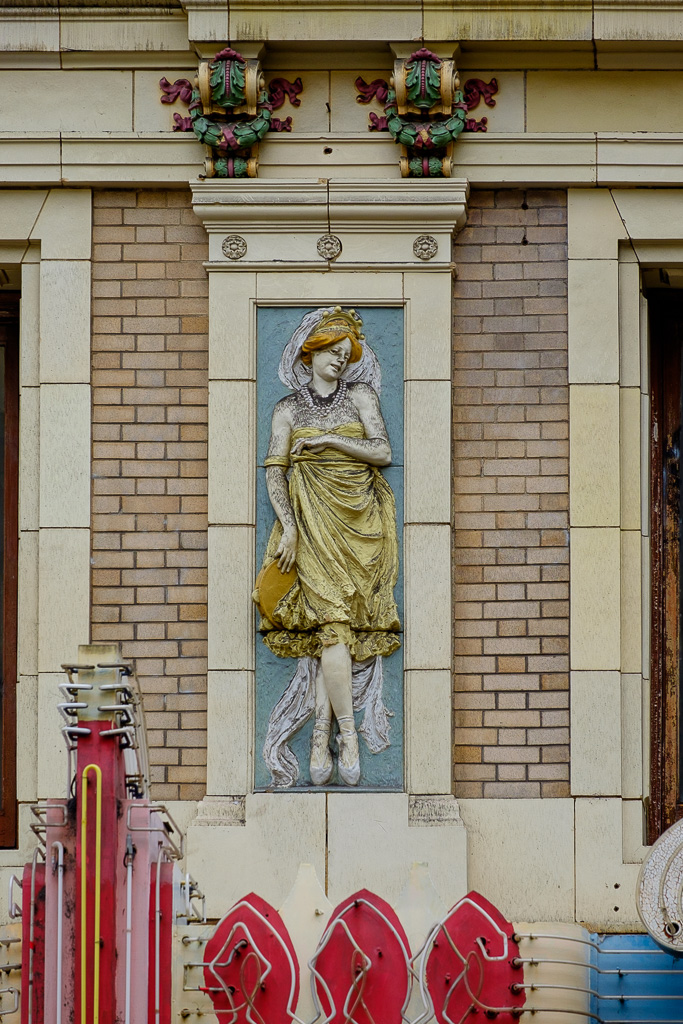
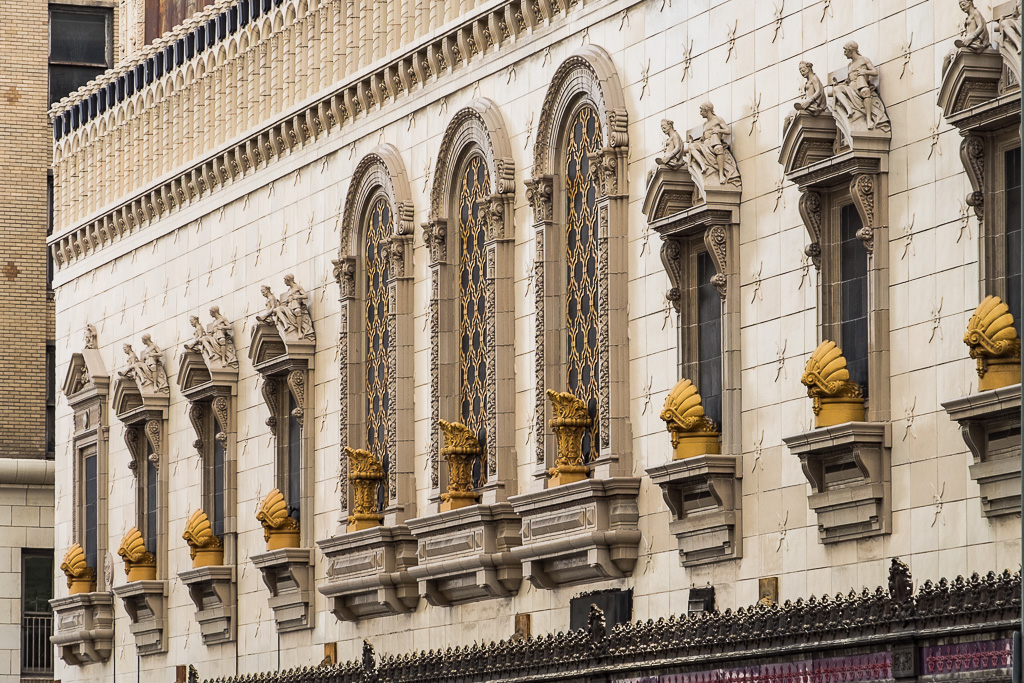
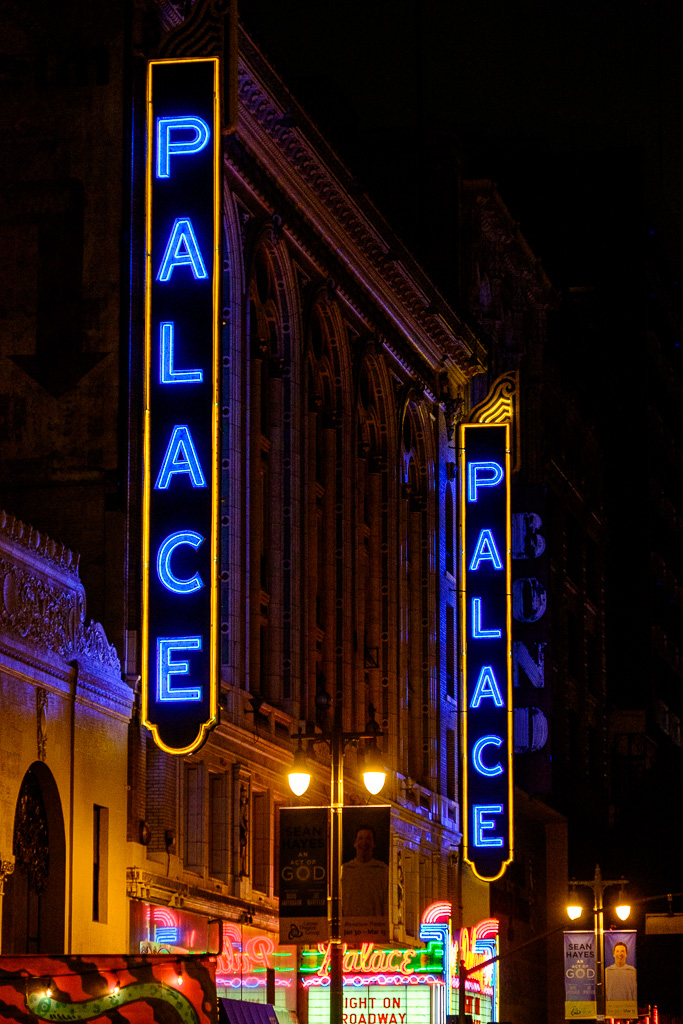
*Palace Theatre, a former vaudeville theater and later a movie theater, 630 S. Broadway, opened in 1911. It was originally an Orpheum (until 1926) and is said to be the oldest remaining Orpheum theater in the US. The four different multi-colored terra-cotta panels in this set (meant to be the muses of vaudeville) are on the façade. Closed 2000. It is also owned by the Broadway Theatre Group, was renovated in 2011 and is used for performing arts, live music, film shoots and private events (and occasional movies). “Dreamgirls” was filmed there (among other movies).
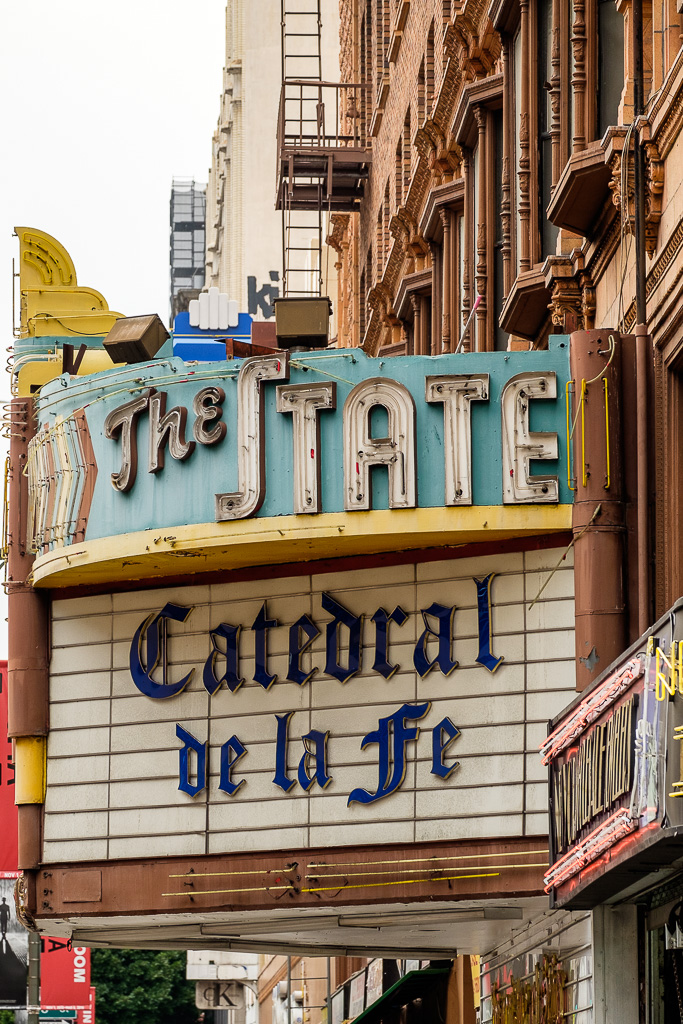
State Theatre – another vaudeville theater and later movie palace –703 S. Broadway, opened in 1921. Closed as a theater in 1998 and currently leased by the Cathedral of Faith for use as a church from Broadway Theatre Group. It’s said to be the next big restoration once the church lease is up. Sadly, it was not open on the Night on Broadway.
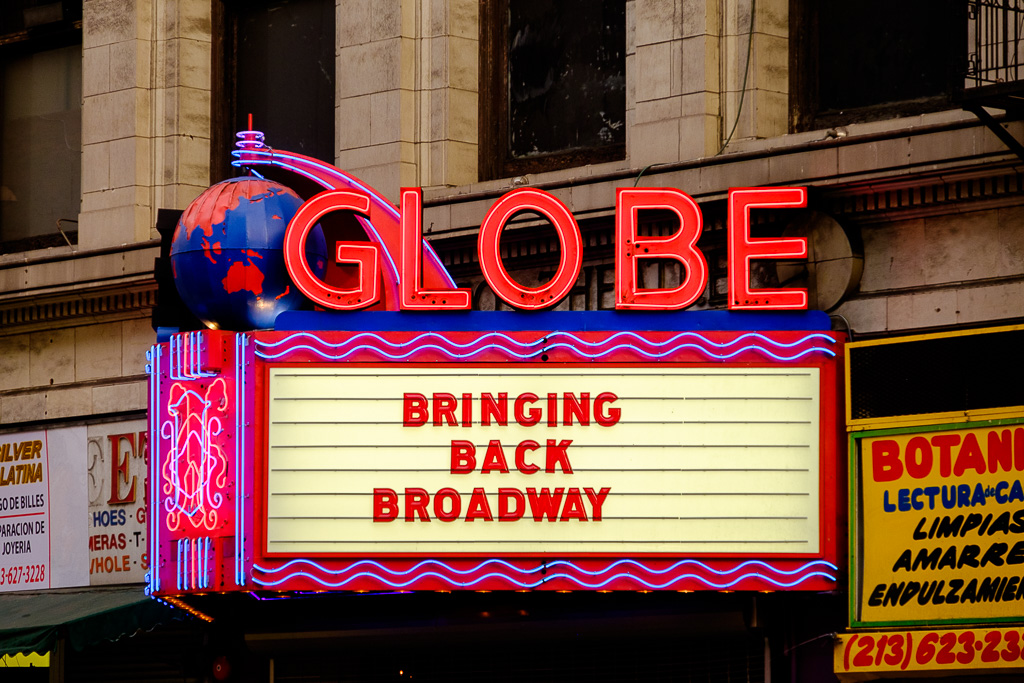
*Globe Theatre, 744 S. Broadway, opened in 1913 as the Morosco Theatre, and originally used for full-scale live dramatic theater until later converted into a movie theater. It was first renamed the President and later became the Globe. It closed in 1987. The restored marquee was relit in 2014, and the Globe is now a multipurpose space for music, theatrical events and films.
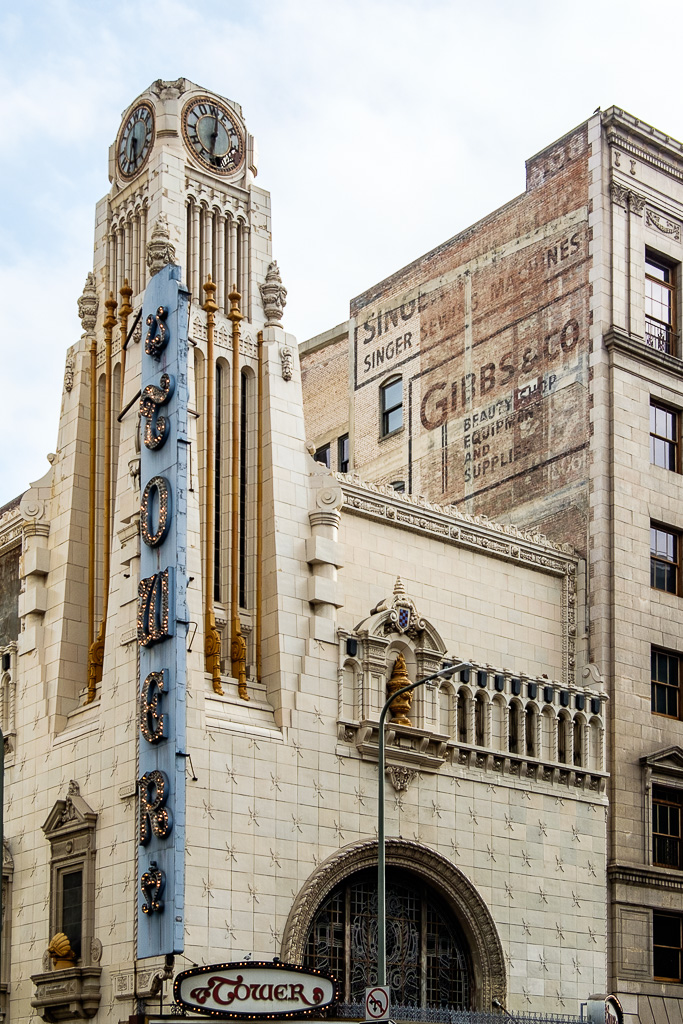
*Tower Theatre, 802 S. Broadway, opened in 1927. It is the fourth of the theaters now owned by the Broadway Theatre Group. The Tower was the first movie theatre in L.A. to be wired for sound, and in October 1927 a sneak preview of The Jazz Singer was held there one night before its official premiere in New York which made the Tower the first movie theater in the world to have publicly shown a feature-length “talking picture”.
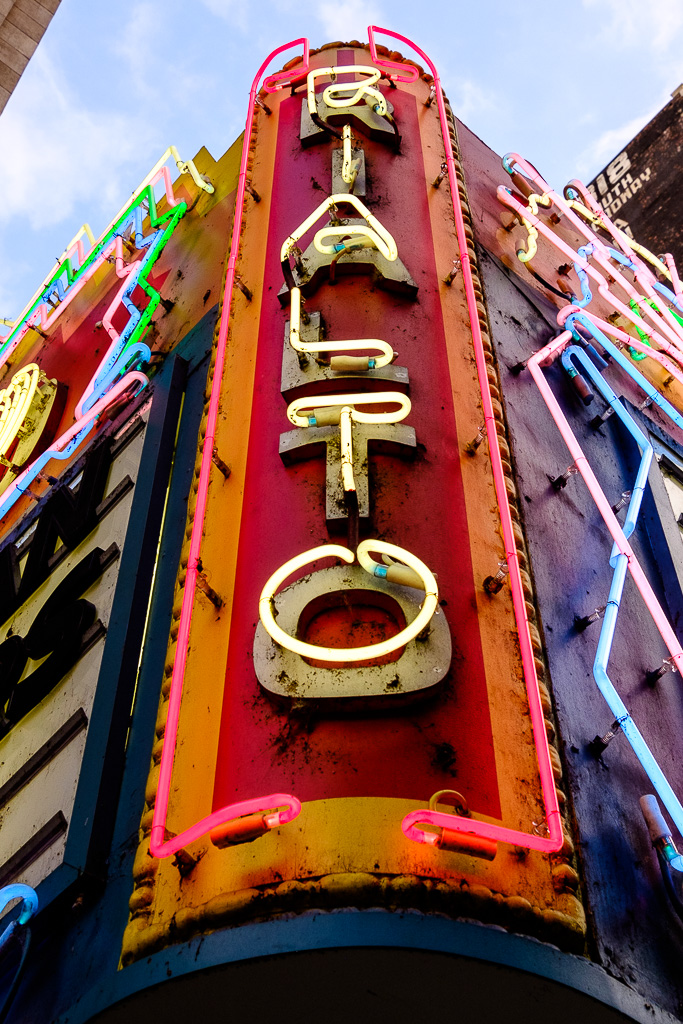
Rialto Theater, 812 S. Broadway, closed 1987. Now an Urban Outfitters store.
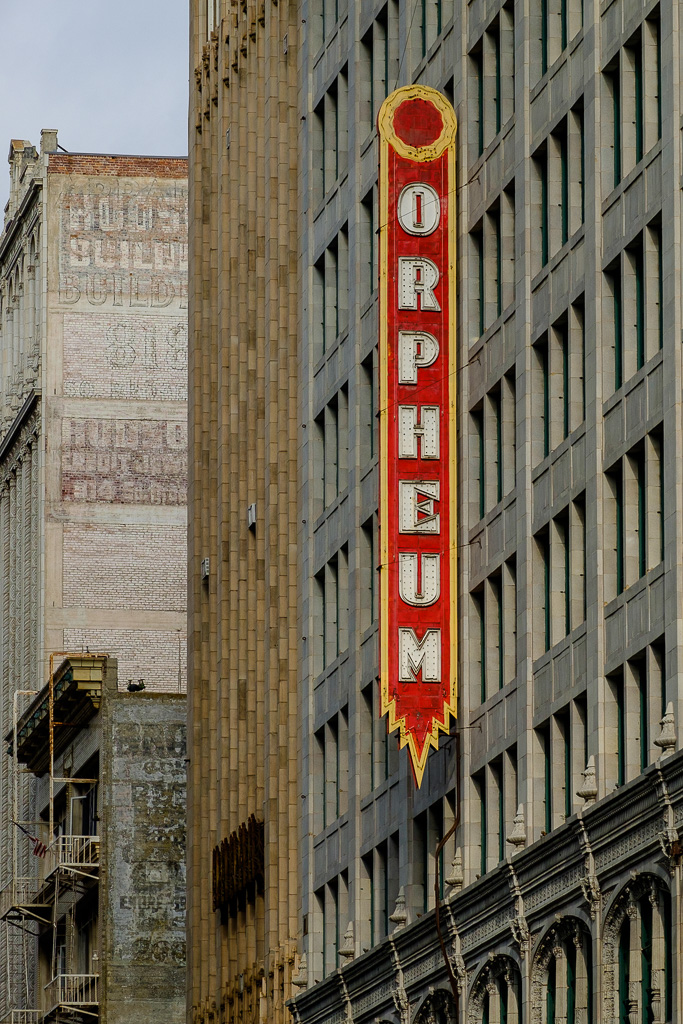
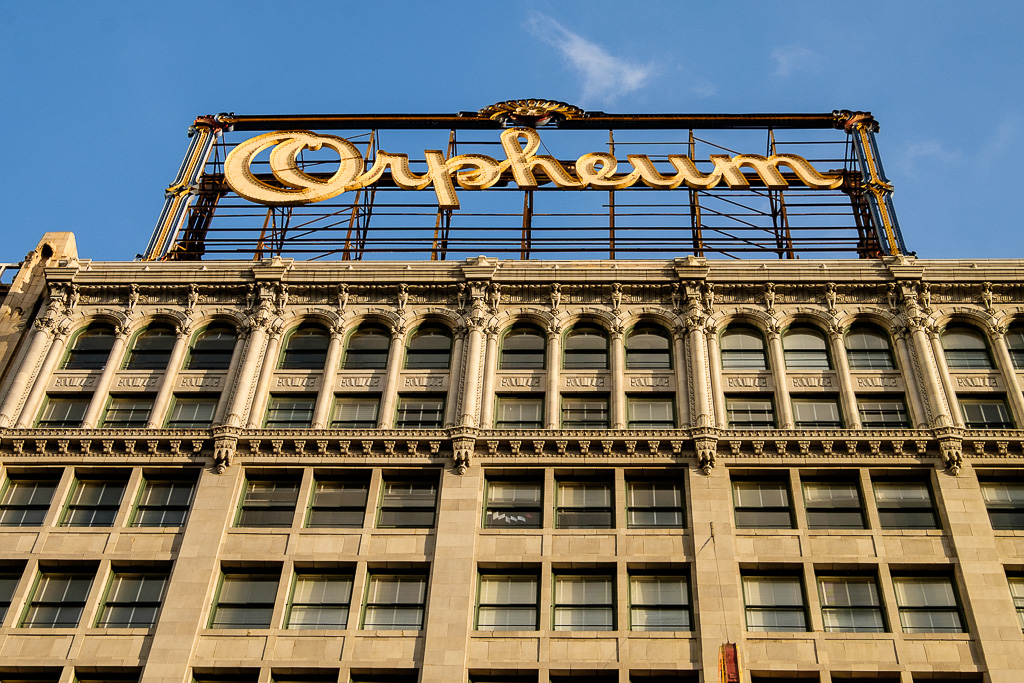
*Orpheum Theatre – vaudeville theater and later a movie palace – 842 S. Broadway, opened in 1926. I understand that it was the last movie palace still showing films in downtown L.A. when it shut its doors in late 2000. This is yet another stunner. Just a few years later after a $4 million restoration the Orpheum Theatre reopened as a venue for concerts, theater and other events, and for film shoots and the Los Angeles Conservancy’s “Last Remaining Seats” classic film series. It is said to be one of the best preserved L.A. movie palaces.
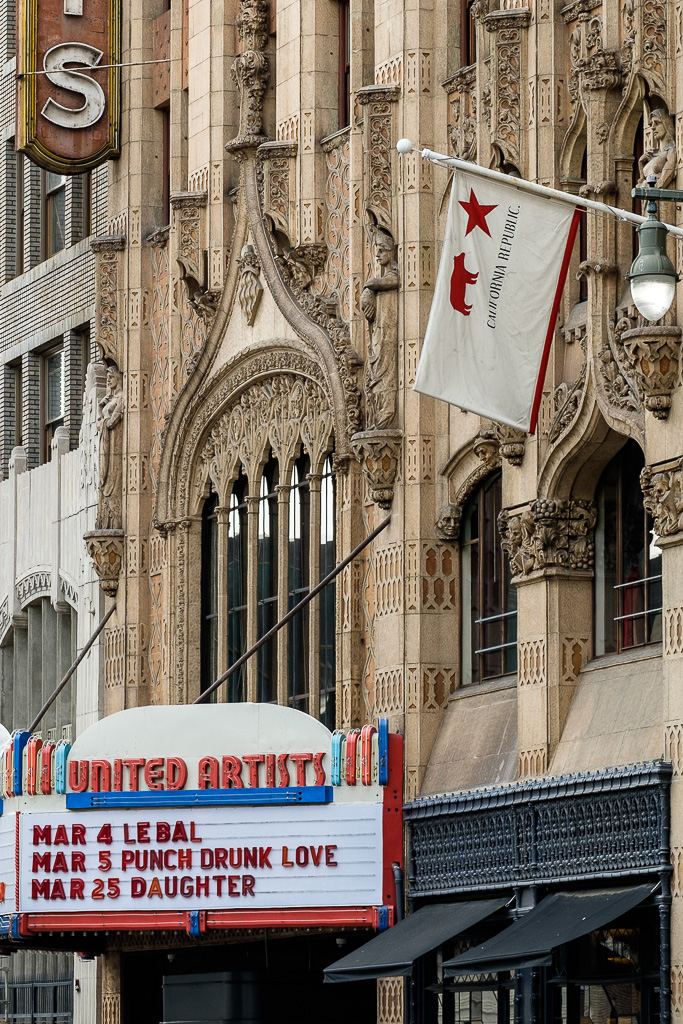
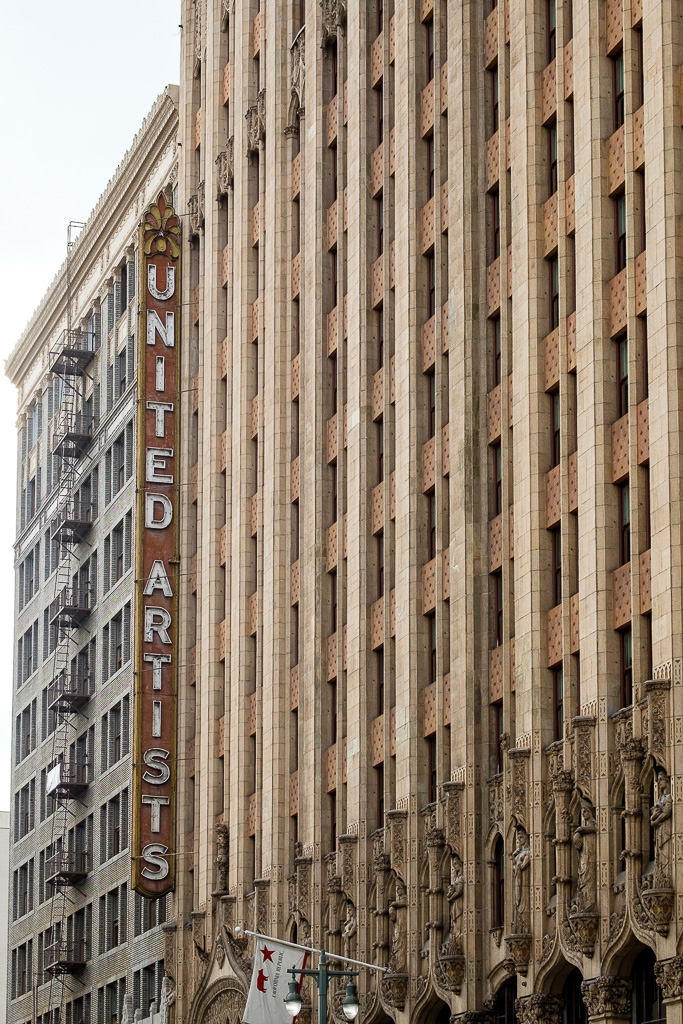
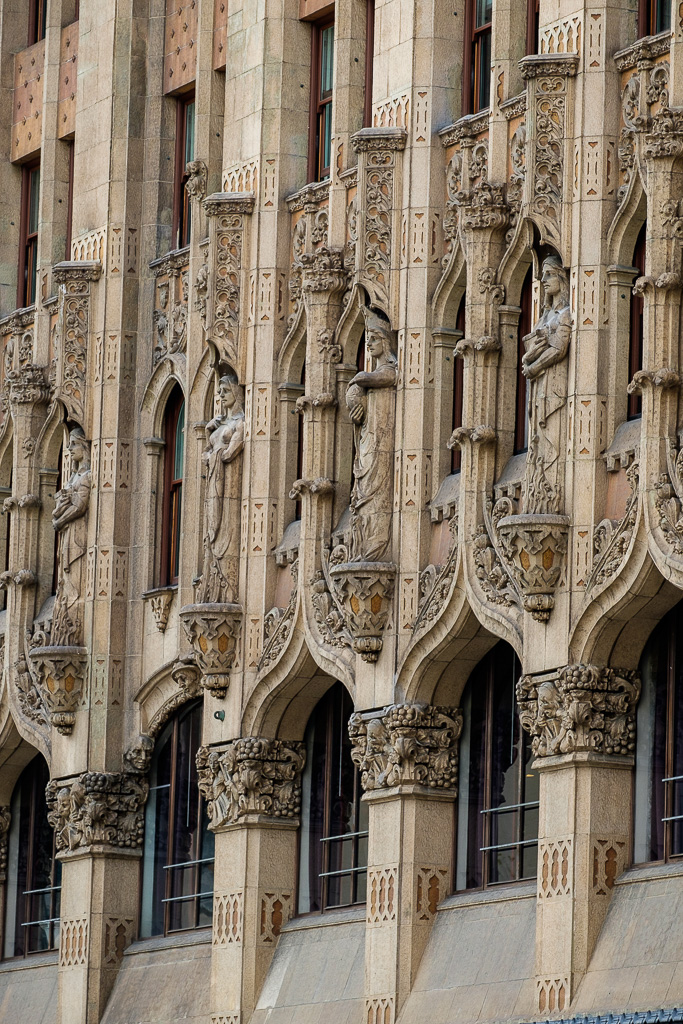
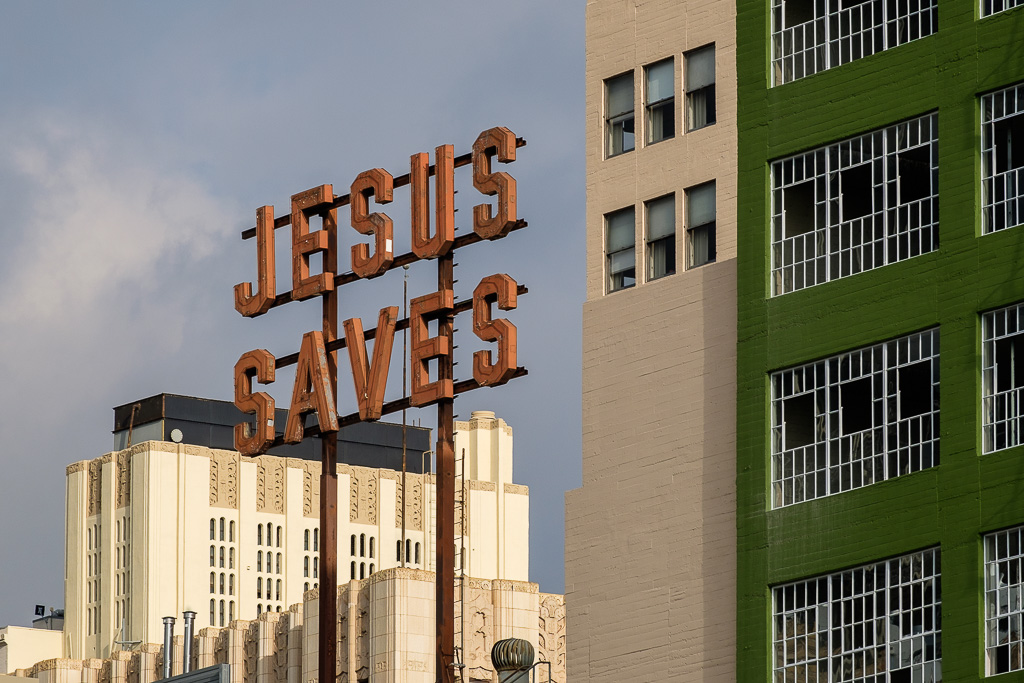
*United Artists Theater, 933 S. Broadway, opened in 1927. Closed as a theater in 1989. In 1990, the United Artists Theater was restored by Gene Scott’s L.A. University Church; the famous “Jesus Saves” sign was placed on the back side of the building (where it still is situated). In 2013, the upper floors of the building were renovated into a boutique hotel, the Ace Los Angeles; in 2014, the auditorium reopened as a concert venue (now The Theatre at Ace Hotel).
The theaters close to the Broadway grouping:
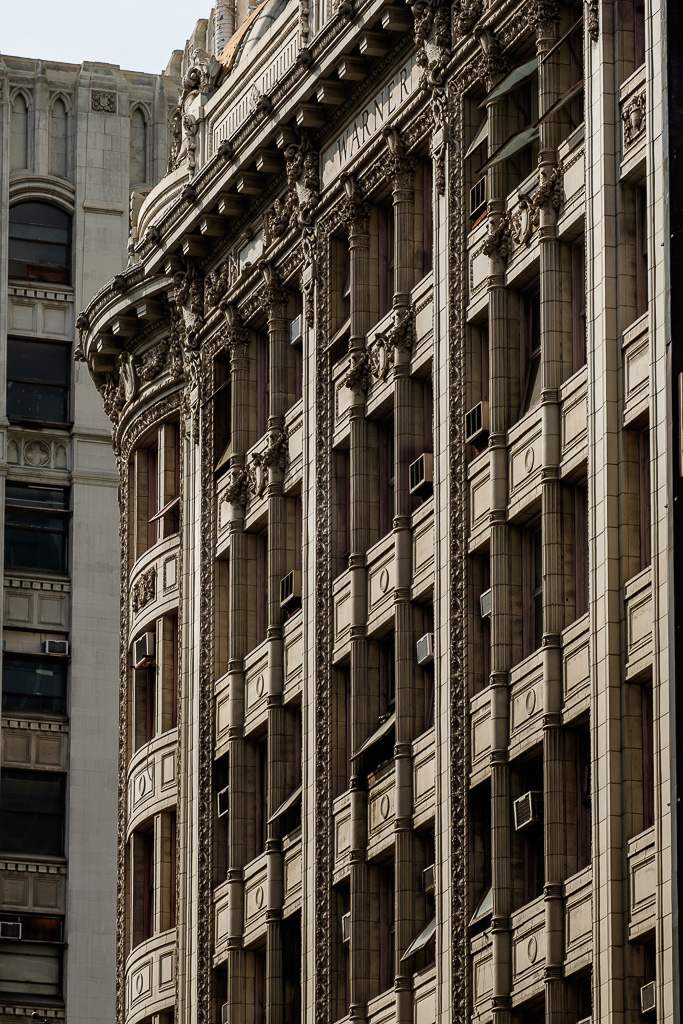
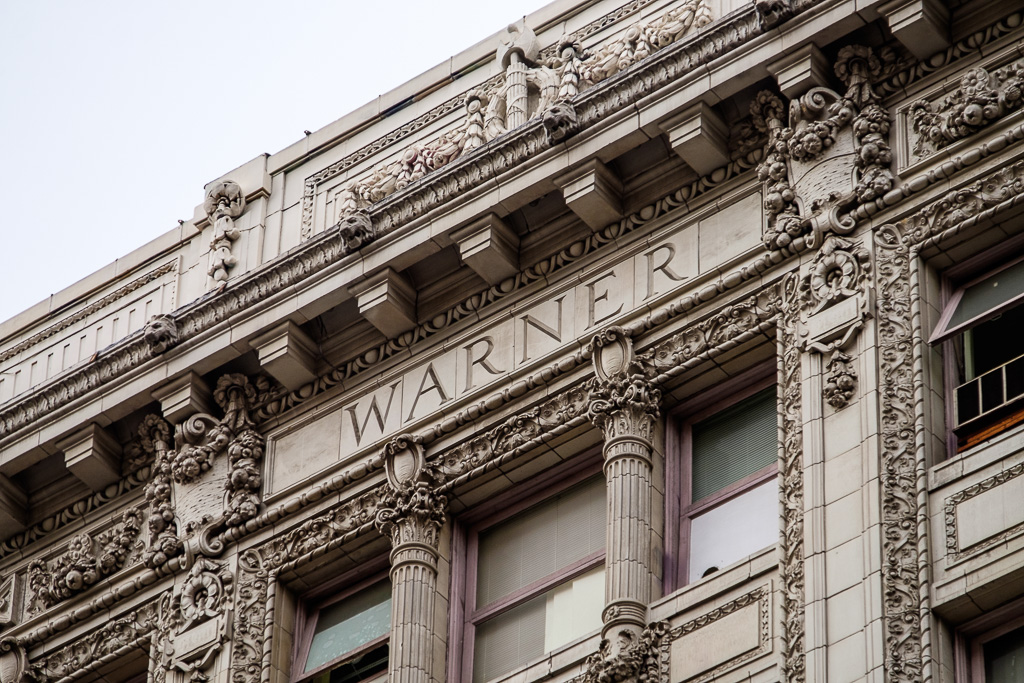
Warner Bros. Downtown Theatre, 401 W. 7th St (northwest corner of South Hill and West 7th St). Opened on August 17, 1920, and originally called the Pantages Theatre. Closed in 1975. Thereafter, it was used as a church for a time. The main floor and lobby have been used for retail space (the Jewelry Mart) since the late 1970s.
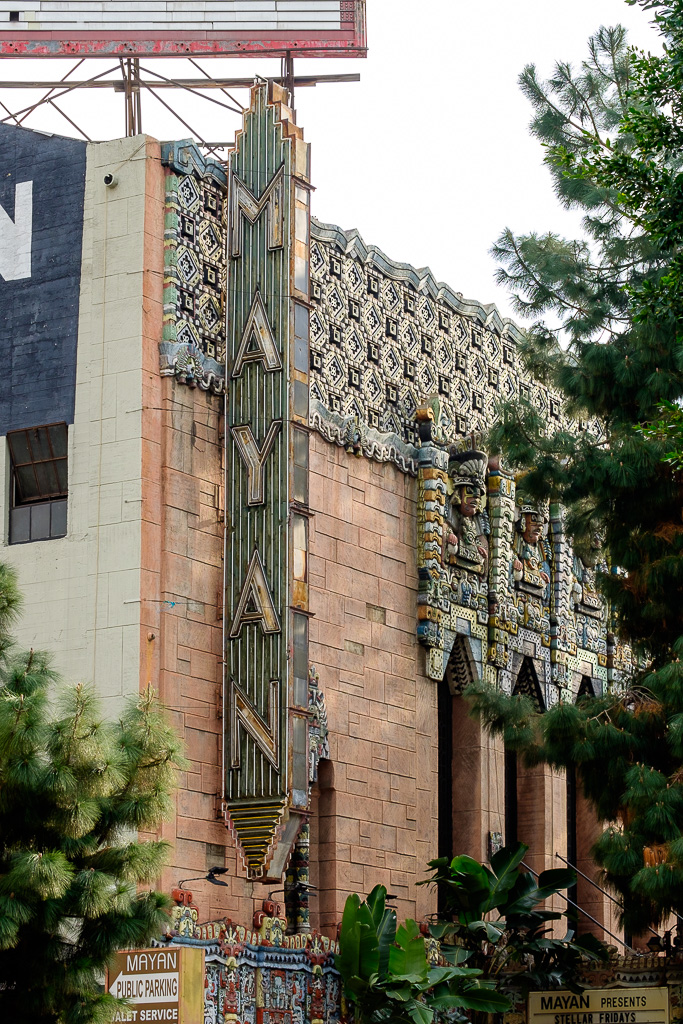
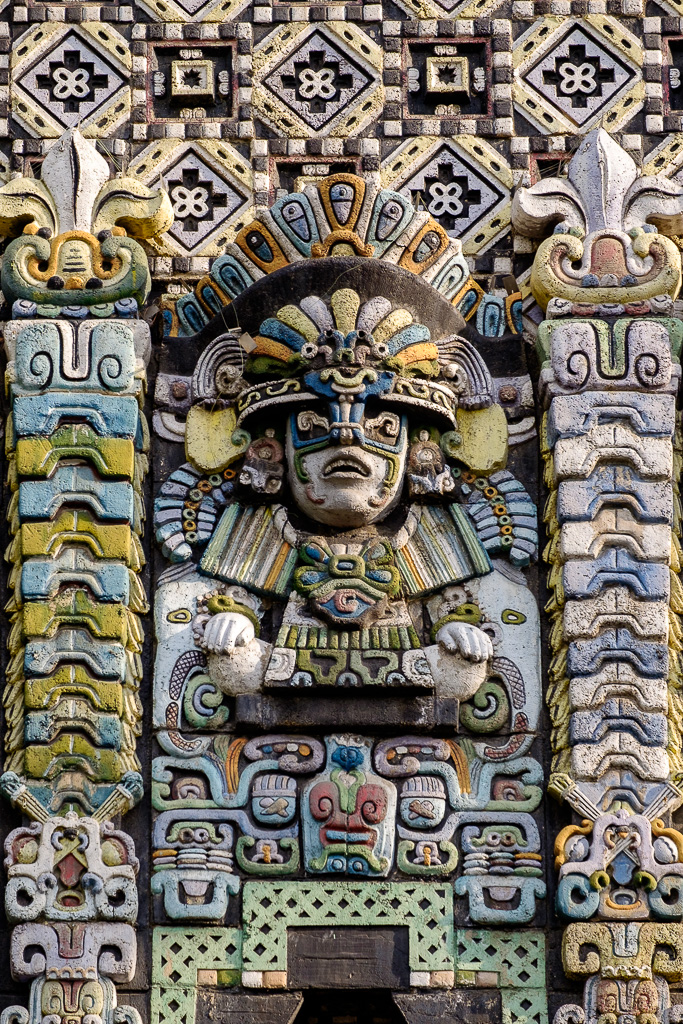
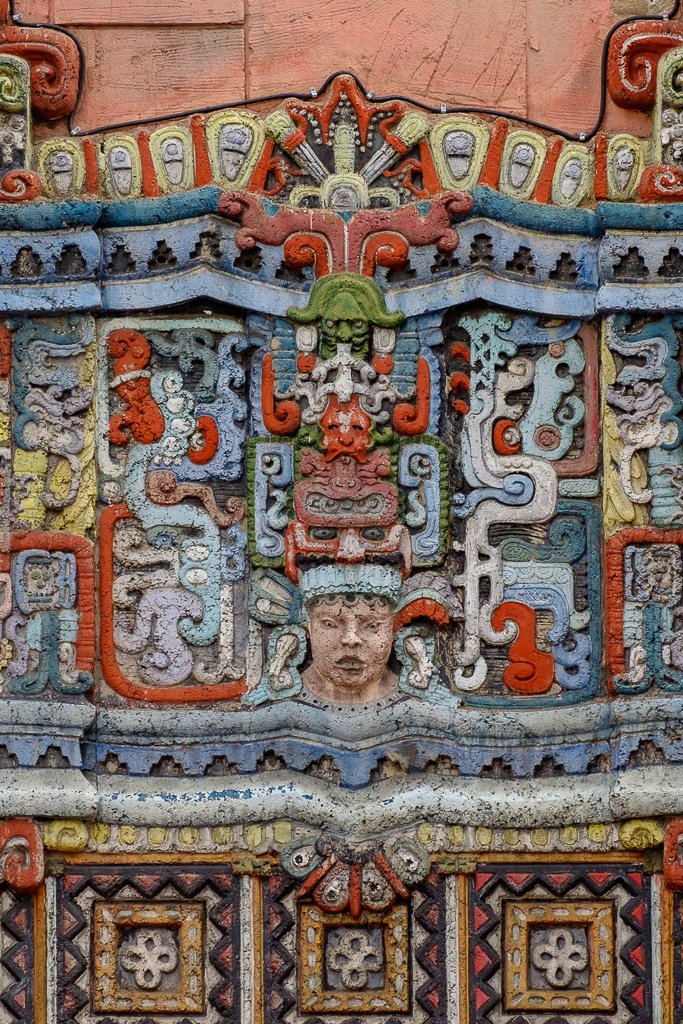
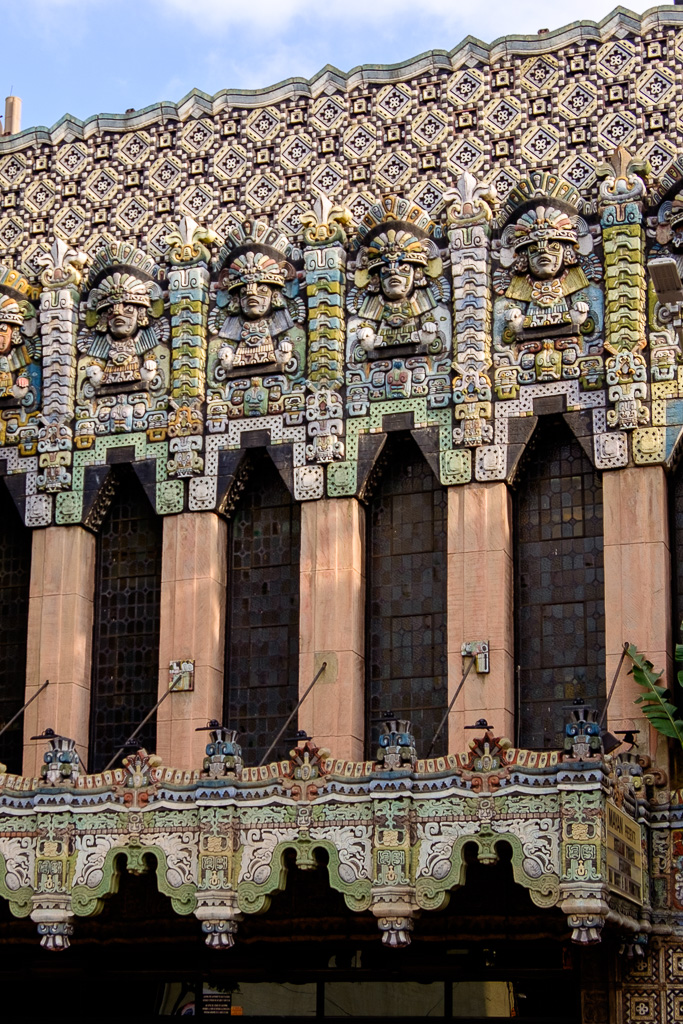
Mayan Theater, a vaudeville theater and later a movie palace, 1014 South Hill St. Opened in 1927. Since 1990 it has been a nightclub. Remember the Mayan Hotel on Route 66 in the post covering the drive from San Bernardino to Pasadena? This is another “Mayan Revival” structure.
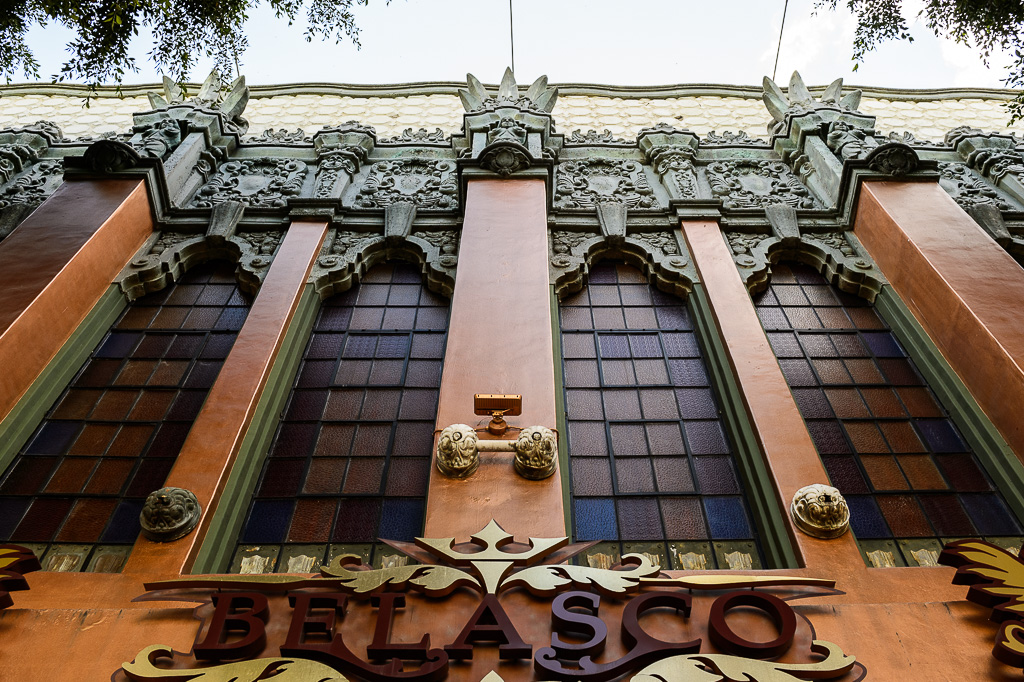
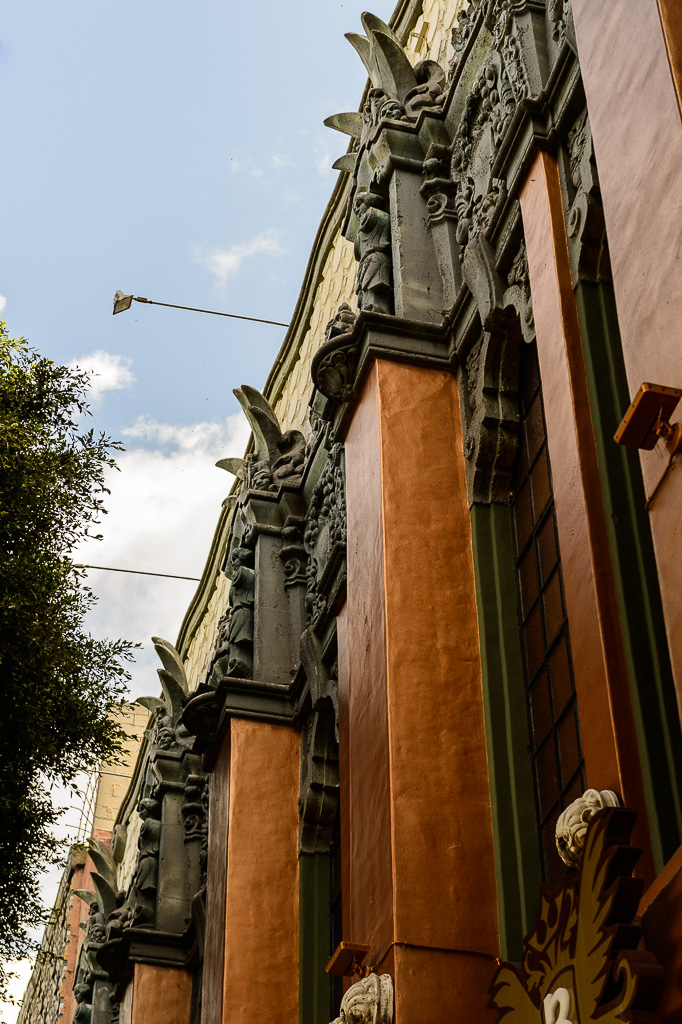
Belasco Theatre, 1050 South Hill Street, next to the Mayan, and dating back to 1904. It served as a church from 1950 to 1987. It is now used mostly for concerts, special events and private functions.